
Planning Your Sacred Journey with Intelligence and Insight
Haridwar, one of India’s seven holiest cities, welcomes millions of visitors annually who come seeking spiritual solace, cultural immersion, and the transformative experience of bathing in the sacred Ganges. However, the difference between a chaotic, overwhelming visit and a truly perfect vacation often comes down to smart planning and insider knowledge. This comprehensive guide will help you navigate Haridwar intelligently, maximizing your experience while minimizing common pitfalls that many first-time visitors encounter.
Whether you’re a spiritual seeker, cultural enthusiast, or simply curious traveler, discovering Haridwar the smart way means understanding when to visit, where to stay, what to prioritize, and how to experience this ancient city’s profound energy without getting lost in tourist traps or logistical nightmares.
Timing Your Visit: The Smart Traveler’s Calendar
The first smart decision involves choosing when to visit Haridwar. While the city receives pilgrims year-round, your experience will vary dramatically depending on season and special events.
October to February represents the ideal window for most travelers. The weather remains pleasant with daytime temperatures ranging from 15-25°C, perfect for temple visits and ghat exploration. Clear skies offer stunning views of the Shivalik hills, and the cooler temperatures make walking through crowded areas more comfortable. This is smart timing for those prioritizing comfort alongside spirituality.
March to May brings warmer weather, with temperatures climbing to 35-40°C by late April and May. However, smart travelers know this period offers advantages—fewer crowds at major sites, better hotel rates, and the opportunity to experience Haridwar at a more relaxed pace. If you can handle the heat, this might be your window for a more intimate experience.
Monsoon season (June to September) presents challenges—humidity, occasional flooding, and slippery ghats—but also dramatic beauty. The Ganges swells with mountain runoff, taking on a powerful, almost wild character. Smart travelers willing to embrace unpredictability often find this season spiritually intense and photographically stunning.
Festival timing requires special consideration. Kumbh Mela, occurring every twelve years with a smaller Ardh Kumbh every six years, transforms Haridwar into the world’s largest religious gathering. Witnessing this is extraordinary, but requires extensive advance planning. Annual festivals like Kanwar Yatra (July-August) and Diwali (October-November) also create massive crowds. Smart planning means either specifically targeting these events or avoiding them if you prefer a quieter experience.
Choosing Your Base: Why Evaara by the Ganges Makes Smart Sense
Perhaps the single most important decision affecting your Haridwar vacation is where you base yourself. The city offers accommodations ranging from basic ashrams to luxury hotels, but truly smart travelers understand that location, amenities, and atmosphere combine to either enhance or diminish your entire experience.
Evaara by the Ganges represents the smart choice for discerning travelers who understand that a perfect vacation requires balance—between spiritual immersion and physical comfort, between authentic experience and modern convenience, between budget consciousness and value-driven spending.
Strategic Location: Located directly along the Ganges, Evaara by the Ganges positions you at the heart of what matters most—the sacred river itself. Unlike hotels situated in Haridwar’s congested interior, where navigating traffic and crowds becomes exhausting, this riverside location provides immediate access to the Ganges while maintaining a peaceful atmosphere. Smart travelers recognize that saving time and stress through strategic location is invaluable.
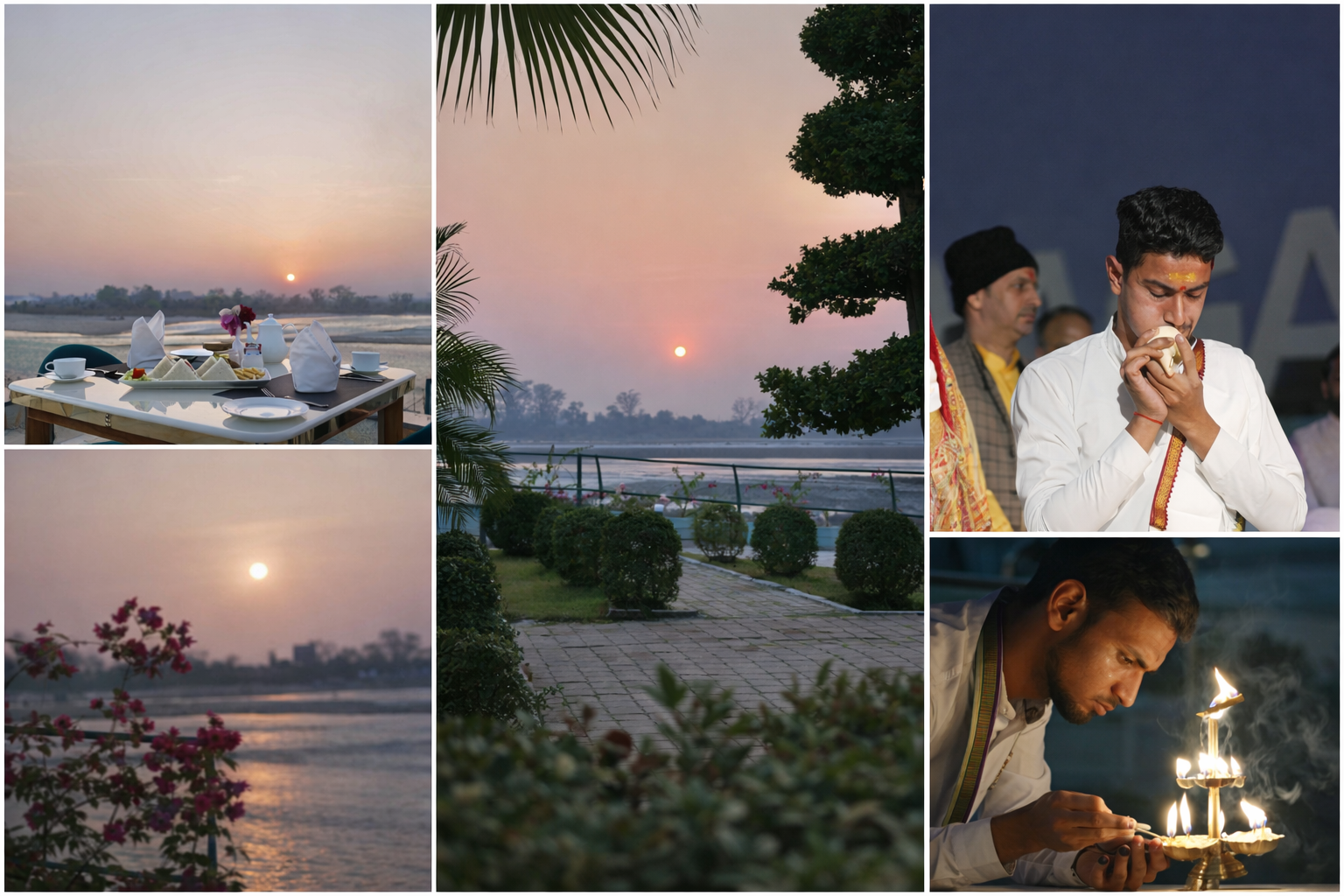
Private Ghat Access: One of the smartest advantages of staying at Evaara by the Ganges is the property’s private ghat. While thousands crowd Har Ki Pauri daily, you can experience the Ganges intimately at any hour. Morning meditations by the river, evening contemplation without jostling crowds, even a peaceful dip in the sacred waters—these become possible through private ghat access. This single amenity often proves more valuable than any other feature, allowing you to connect with the Ganges on your own terms and timeline.
Exceptional Dining: Smart travelers know that dining experiences significantly impact vacation satisfaction. Satvaraasa, the multi-cuisine restaurant at Evaara by the Ganges, solves a common dilemma—how to honor the region’s vegetarian tradition while satisfying diverse palates. The extensive buffet format means families with varied preferences all find satisfaction, while the quality of preparation ensures you’re nourishing your body properly throughout your spiritual journey. After days of rich temple prasad and street food (both delicious but potentially challenging for unaccustomed digestive systems), having reliable, high-quality dining becomes a genuine relief.
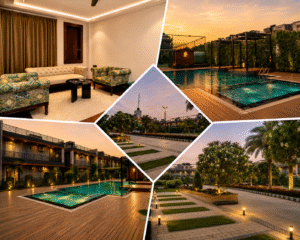
Thoughtful Amenities: The swimming pool, Ganga-facing lawns, gazebo, and sports zone provide important balance. Smart travelers understand that even spiritual journeys require downtime and variety. Children need places to play, couples need romantic spaces for connection, and everyone benefits from the option to simply relax rather than constantly sightsee. These amenities transform Evaara by the Ganges from merely a place to sleep into a destination within your destination.
Daily Ganga Aarti: The evening Ganga Aarti performed at Evaara’s ghat represents smart vacation design—accessing an essential Haridwar experience without the chaos of Har Ki Pauri’s massive gatherings. You can attend the intimate ceremony at your accommodation, then venture to Har Ki Pauri on a separate evening to experience the large-scale version. This dual approach gives you perspective on both intimate devotion and collective faith.
Smart Sightseeing: Prioritizing Your Temple and Ghat Visits
Haridwar contains dozens of temples and numerous ghats. Smart travelers prioritize strategically rather than attempting to see everything, which leads to exhaustion and diminished appreciation.
Har Ki Pauri remains essential and deserves at least two visits—one during quiet morning hours when serious practitioners dominate, and once during evening Aarti when the energy peaks. The smart approach involves arriving early morning (by 6 AM) to witness the ghat at its most authentic, then returning at sunset (around 6-7 PM depending on season) for the spectacular Aarti ceremony. Avoid midday visits when heat and crowds maximize discomfort.
Mansa Devi Temple and Chandi Devi Temple, both accessible via cable car, offer spiritual significance plus spectacular views. The smart strategy involves visiting one per day rather than both in a single exhausting afternoon. Morning visits avoid the worst heat and longest queues. The cable car rides themselves provide perspective on Haridwar’s geography and the Ganges’ path through the valley.
Daksheshwar Mahadev Temple, located about 4 kilometers from central Haridwar, receives fewer tourists despite its mythological significance as the site where Sati immolated herself. Smart travelers seeking deeper spiritual experiences and escape from crowds find this temple rewarding, especially when combined with a leisurely drive through surrounding villages.
Maya Devi Temple, one of 51 Shakti Peethas scattered across the subcontinent, holds immense religious importance but sees relatively light tourist traffic. Smart visitors include this in their itinerary for its spiritual significance and as a contrast to more crowded sites.
Smart Cultural Navigation: Etiquette and Expectations
Perfect vacations balance authentic experiences with comfort, and this requires cultural intelligence. Smart travelers in Haridwar observe certain principles that enhance both their own experience and their acceptance by locals.
Dress modestly throughout the city—shoulders and knees covered, avoiding overly tight or revealing clothing. This isn’t about restriction but respect, and properly dressed visitors receive warmer welcomes and easier temple access.
Remove shoes before entering any temple or ashram, and carry socks if you’re uncomfortable walking barefoot on potentially hot stone surfaces. Smart travelers keep a small bag for shoes rather than trusting crowded shoe-check counters where items sometimes go missing.
Photography requires discretion. While Haridwar offers spectacular visual opportunities, always ask permission before photographing people, especially priests performing rituals or women bathing. Many sacred ceremonies shouldn’t be photographed at all. Smart travelers prioritize respectful presence over Instagram content.
Donation requests are constant, from temple priests to beggars to various “charitable” organizations. Smart travelers decide their personal donation policy in advance—perhaps carrying small bills for temple donations but politely declining aggressive solicitations. Don’t let financial requests diminish your spiritual experience.
Prasad (blessed food) offered at temples is generally safe, but smart travelers with sensitive stomachs might politely accept but discreetly dispose of it later. If you do consume prasad, do so with genuine reverence—it’s considered blessed by the deity.
Smart Budgeting: Getting Maximum Value
Smart travelers distinguish between false economy and genuine value. Haridwar offers experiences across every price point, and understanding where to spend versus save enhances your vacation.
Accommodation represents your most important investment. While budget options exist, the value offered by Evaara by the Ganges—location, private ghat, quality dining, amenities—far exceeds its cost difference from mid-range hotels located less conveniently. The stress saved, time conserved, and enhanced experiences justify what smart travelers recognize as an investment rather than an expense.
Food in Haridwar ranges from street vendors to upscale restaurants. Smart travelers embrace variety—street food for authentic flavor and cultural immersion, but reliable dining at places like Satvaraasa for daily sustenance. This balanced approach satisfies curiosity without risking illness that could derail your vacation.
Transportation within Haridwar is cheap via auto-rickshaws and cycle-rickshaws, but agree on prices before departing to avoid disputes. App-based services like Ola function in Haridwar, offering transparent pricing. Smart travelers staying at well-located properties like Evaara by the Ganges minimize transportation needs and costs.
Shopping opportunities abound—rudraksha beads, brass items, religious texts, traditional clothing. Smart travelers shop in the lanes behind Har Ki Pauri where locals shop rather than immediately surrounding the ghat where tourist prices dominate. Bargaining is expected but should be good-natured rather than aggressive.
Smart Health Practices: Staying Well Throughout Your Visit
Nothing derails a perfect vacation faster than illness. Smart travelers take preventive measures seriously.
Hydration becomes crucial, especially during warmer months. Carry a reusable water bottle and refill from reliable sources—your hotel, bottled water, or filtered water at restaurants. Avoid tap water and ice of uncertain origin.
Hand hygiene matters intensely. Carry hand sanitizer and use it frequently, especially before eating. Many temples and ghats lack adequate handwashing facilities, making sanitizer essential.
Stomach care prevents the most common travel complaint. Smart travelers build their digestive resilience gradually—starting with thoroughly cooked foods, avoiding raw vegetables from street vendors, and carrying digestive aids like probiotics. Staying at Evaara by the Ganges where food safety standards meet international expectations provides a stable dining foundation.
Sun protection often gets overlooked in spiritual destinations, but Haridwar’s sun is intense. Sunscreen, hats, and sunglasses protect against more than discomfort—they prevent illness that could shorten your trip.
Smart Spiritual Engagement: Depth Over Tourism
The smartest travelers recognize that Haridwar’s true value lies not in sightseeing checklist completion but in genuine spiritual and cultural engagement. This requires slowing down, being present, and allowing space for authentic experiences.
Morning meditation by the Ganges, whether at Evaara’s private ghat or a public location, connects you with the river’s energy and the countless seekers who’ve meditated here across millennia. Even ten minutes of silent sitting proves more valuable than rushing through five temples.
Attending a morning puja at any temple offers insight into daily devotional life beyond tourist-oriented evening spectacles. The quiet sincerity of morning worship often resonates more deeply than evening’s drama.
Conversation with local practitioners, if approached respectfully, provides insights no guidebook offers. Smart travelers express genuine interest and listen more than they talk, recognizing they’re privileged witnesses to living traditions.
Simply sitting and observing, whether at a ghat, in a temple courtyard, or on Evaara’s riverside lawns, allows you to absorb Haridwar’s atmosphere rather than merely seeing its sights. The smartest travelers understand that space for integration transforms tourism into transformation.
Your Smart Haridwar Vacation Awaits
Discovering Haridwar the smart way means planning thoughtfully, choosing your base wisely, prioritizing quality over quantity, respecting local culture, investing in genuine experiences, and protecting your health. It means recognizing that perfect vacations emerge from intelligent decisions made before and during your journey.
Evaara by the Ganges provides the ideal foundation for your smart Haridwar exploration—strategically located, thoughtfully designed, culturally respectful, and comfort-focused. From this base, you can explore Haridwar’s spiritual depths while knowing you have a peaceful sanctuary for rest, reflection, and rejuvenation.
Book your stay at Evaara by the Ganges and begin planning your perfect Haridwar vacation—one that balances sacred experiences with practical comfort, ancient traditions with modern understanding, and tourist curiosity with genuine spiritual engagement. Along the banks of the eternal Ganges, your smart, soulful journey awaits.