

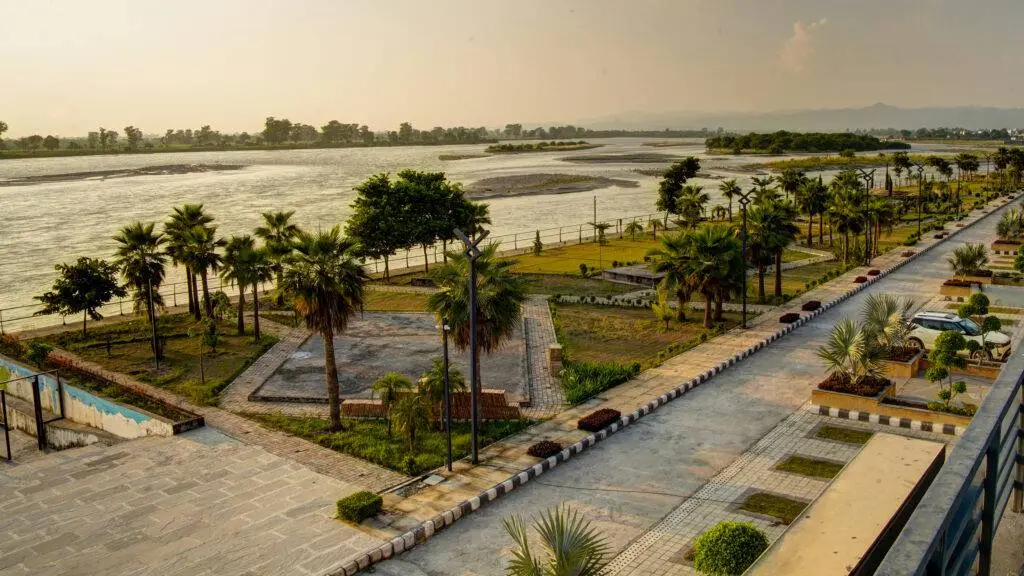
There are places in the world that change you. Not gradually, over time, but almost immediately—as if stepping across their threshold activates something dormant within your soul. For me, that transformation began on the banks of the Ganges, in the twin spiritual capitals of India: Haridwar and Rishikesh.
As a first-time visitor to India’s spiritual heartland, I arrived with a mixture of excitement, curiosity, and admittedly, some apprehension. Would I understand the rituals? Would I feel out of place? Could someone with no background in Hinduism or yoga genuinely connect with these sacred cities?
The answer, I discovered, was a resounding yes—especially when you have the perfect base from which to explore. My home for this transformative journey was Evaara by the Ganges, a riverside sanctuary in Haridwar that became not just accommodation, but an integral part of my spiritual awakening.
Day 1: Arrival at Evaara by the Ganges
Finding My Sacred Sanctuary
After the sensory overload of Delhi—the traffic, the noise, the relentless energy—the four-hour drive to Haridwar felt like a gradual decompression. As our car left the plains and began approaching the Shivalik foothills, the air changed. It became cleaner, lighter, infused with something I couldn’t quite name but could definitely feel.
Arriving at Evaara by the Ganges in the late afternoon, I was immediately struck by how the property seemed to exist in perfect harmony with its surroundings. This wasn’t a hotel that had been dropped onto the landscape; it was a space that emerged from it. Traditional stone and timber architecture, lush gardens leading down to the river, and that sound—the eternal, soothing flow of the Ganges.
My room overlooked the river. I remember standing on the balcony, watching the water catch the golden afternoon light, and thinking: “This is where I’m meant to be right now.”
The staff at Evaara welcomed me with warmth that felt genuine rather than performative. After checking in, I was offered a traditional welcome drink—a fragrant, cooling concoction made with rose water, mint, and some magical ingredient I couldn’t identify (I later learned it was infused with holy basil, or tulsi). It tasted like India felt: complex, layered, impossible to fully comprehend but utterly captivating.
Evening Ganga Aarti: My First Spiritual Experience
The concierge at Evaara suggested I attend the evening Ganga Aarti at Har Ki Pauri, Haridwar’s most famous ghat. “It’s best experienced your first night,” he said. “Let it set the tone for your journey.”
He arranged transportation and even sent along a knowledgeable guide—Mohan, a gentle-spoken man in his sixties who had been conducting these tours for decades. The drive to Har Ki Pauri took just fifteen minutes from Evaara, but it felt like entering another world entirely.
The ghat was already filling with people as the sun began its descent. Pilgrims, tourists, sadhus in saffron robes, families with children—humanity in all its diversity gathered for a single purpose: to honor the river that gives life.
As darkness fell, priests in matching ceremonial dress took their positions on a raised platform. And then it began.
The aarti ceremony is difficult to describe to someone who hasn’t experienced it. Brass lamps with multiple wicks are lit and moved in synchronized, circular patterns—offering to the river, to the gods, to the very concept of the divine. Bells ring in rhythmic harmony. Conch shells blow. The chanting rises, swells, fills every corner of the space.
I don’t consider myself religious, but standing there, watching the flames reflect on the water, surrounded by hundreds of voices joining in devotional song, something shifted inside me. It wasn’t conversion or even understanding—it was recognition. Recognition that humans have been gathering by sacred waters for thousands of years, seeking connection to something greater than themselves. And in that moment, I was part of that unbroken chain.
When I returned to Evaara that night, I sat in the riverside garden for a long time, processing what I’d witnessed. The resort’s quiet elegance provided the perfect counterbalance to the intense energy of Har Ki Pauri. I needed both—the immersion and the retreat, the chaos and the calm.
Day 2: Diving Deeper into Haridwar
Morning Yoga at Evaara
I woke before dawn, pulled from sleep by the sound of the Ganges and the first bird calls of morning. Evaara offers daily yoga sessions, and as someone whose yoga experience consisted entirely of three Bikram classes in college, I was nervous but curious.
The yoga pavilion sits on an elevated platform overlooking the river. Our instructor, Priya, began class as the sun rose, painting the sky in shades of pink and gold. We started with pranayama—breathing exercises that made me realize how shallowly I normally breathe, how disconnected I am from my own body.
The asanas (postures) were challenging but never competitive. Priya repeatedly reminded us: “Yoga is not about perfection. It’s about presence.” As I struggled through a particularly difficult balance pose, a monkey appeared on the pavilion railing, watched me for a moment with what I swear was amusement, then disappeared into the trees. Priya laughed. “Even the monkeys are your teachers here.”
After class, breakfast on Evaara’s riverside terrace felt like a meditation in itself. Fresh fruit, traditional parathas, aromatic chai, and conversation with fellow travelers—a retired couple from Australia, a solo traveler from Japan, a family from Mumbai. All of us drawn to this place by some unnamed pull.
Exploring Haridwar’s Spiritual Sites
Armed with recommendations from Evaara’s concierge, I set out to explore Haridwar’s temples. The Mansa Devi Temple, perched on a hilltop, required a cable car ride that offered sweeping views of the city and the Ganges cutting through it like a silver thread.
The temple itself was crowded—devotees tying threads on a sacred tree, making offerings, queuing for darshan (viewing of the deity). I didn’t understand the specific rituals, but the devotion was palpable, moving. An elderly woman caught me looking confused and, in broken English, explained the significance of the tree. “We tie our wishes,” she said, “and Mother Goddess, she listens.”
I tied a thread. I won’t share what I wished for, but I will say this: there’s something powerful about participating in a ritual that millions have performed before you, that millions will perform after you. Individual and universal, personal and collective, all at once.
Back at street level, I wandered through the bazaars near the ghats. Shops selling religious paraphernalia—statues of deities, rudraksha beads, incense, prayer wheels, ceremonial lamps. The air thick with sandalwood smoke. Street vendors offering puja (prayer) supplies—flowers, coconuts, vermillion powder.
I bought a small brass lamp, though I had no idea what I’d do with it. The shopkeeper smiled knowingly. “For your home altar,” he said. I didn’t have the heart to tell him I didn’t have a home altar. But I took the lamp anyway. Maybe someday I would.
Ayurvedic Consultation at Evaara
One of Evaara’s unique offerings is access to authentic Ayurvedic physicians. That afternoon, I had a consultation with Dr. Sharma, an Ayurvedic doctor who had been practicing for over thirty years.
He took my pulse for what felt like ages, examining it with a concentration that made me feel simultaneously important and transparent. He asked about my diet, sleep patterns, energy levels, stress, digestion. Then he pronounced my diagnosis: “Too much vata. You are anxious, moving too fast, not grounded.”
I laughed because he’d just described my entire life.
He recommended specific treatments offered at Evaara’s spa—a series of oil massages called Abhyanga, a treatment called Shirodhara where warm oil is poured continuously on the forehead, and dietary modifications. “India is a good place to slow down,” he said gently. “Let yourself be slow.”
That evening, I had my first Abhyanga. Two therapists working in synchronized rhythm, warm medicated oil, rhythmic strokes that seemed to reach not just muscles but something deeper—tension I’d been carrying for years. By the end, I felt simultaneously heavy and weightless, like I might melt into the massage table or float away.
When I emerged, wrapped in a soft robe, they directed me to a quiet room where I could rest. Through the window, I could see the Ganges, flowing as it had for millennia, indifferent to human stress and schedules. Dr. Sharma was right. I needed to slow down.
Day 3: The Journey to Rishikesh
Along the Pilgrimage Route
Rishikesh lies just 25 kilometers from Haridwar—close enough for a day trip, but Evaara’s concierge convinced me to stay overnight to really experience the city. He arranged a car with a driver who knew the route intimately.
The drive itself is beautiful. The road follows the Ganges as it winds through the Shivalik hills. The river here is wilder than in Haridwar, its waters a stunning turquoise, rapids creating white foam, rocks emerging like ancient sentinels.
We made several stops along the way. At Neelkanth Mahadev Temple, hidden in the forest, I climbed hundreds of steps, passing pilgrims making the same journey with far more devotion and far less complaining than I managed. The temple, dedicated to Shiva, sits in a clearing where the mountains create a natural amphitheater. The peace was profound.
My driver, Rajesh, shared stories as we traveled. About the sadhus who meditate in caves along the river. About the Rishis (sages) who lived in these forests thousands of years ago, from whom Rishikesh (“Lord of the Senses”) takes its name. About his own journey from skepticism to spirituality after a personal crisis brought him to Haridwar years ago.
“This place,” he said, gesturing to the river, the mountains, the infinite sky, “it shows you who you are. Not who you pretend to be. Who you actually are.”
Rishikesh: Where Adventure Meets Spirituality
Rishikesh is different from Haridwar. Where Haridwar feels ancient and devotional, Rishikesh feels younger, more eclectic. Yes, it’s a pilgrimage destination, but it’s also adventure sports central, yoga tourism hub, and international spiritual marketplace.
The famous Laxman Jhula and Ram Jhula—suspension bridges crossing the Ganges—swayed under the weight of pilgrims, tourists, motorcycles, and even the occasional cow. From the bridges, you can see ashrams dotting both banks of the river, their bells creating a constant sonic backdrop.
I visited the Parmarth Niketan Ashram, where the evening Ganga Aarti happens on a grand scale. Unlike Haridwar’s aarti, which feels traditional and local, Rishikesh’s aarti is more international, with hundreds of foreigners sitting cross-legged alongside Indian devotees.
The ceremony included a contemporary environmental message—young students holding signs about cleaning the Ganges, protecting Mother Nature. It was a reminder that even ancient traditions must evolve to address modern crises.
The Beatles Ashram: Where East Met West
One of Rishikesh’s unique attractions is the abandoned Maharishi Mahesh Yogi Ashram, famously where The Beatles stayed in 1968. Now officially called Chaurasi Kutia, it’s a surreal place—nature slowly reclaiming buildings covered in graffiti art, meditation huts with views of the jungle, lecture halls where the Fab Four once sat.
Walking through it, I thought about cultural exchange, about how Indian spirituality went global, about how that fame affected places like Rishikesh. There’s something bittersweet about it—the ashram simultaneously celebrated and abandoned, a monument to both connection and commodification.
Adventure on the Ganges
Rishikesh is famous for white-water rafting, and despite my general preference for calm over chaos, I decided to try it. Our group of eight, guided by two experienced rafters, set out on a 12-kilometer stretch of the Ganges.
The rapids had names: “Golf Course,” “Three Blind Mice,” “Return to Sender.” Each one a thrilling combination of terror and exhilaration. Between rapids, the river calmed, giving us time to float, swim, and appreciate the dramatic gorge walls rising on either side.
Our guide pointed out caves where sadhus meditate for months at a time. “They find God in the silence,” he shouted over the roar of approaching rapids. “We find God in the river!”
Both seemed valid to me.
Day 4: Returning to Evaara with New Eyes
Integration and Reflection
After the intensity of Rishikesh, returning to Evaara by the Ganges felt like coming home. The resort’s calm elegance provided the perfect space to process everything I’d experienced.
I spent the morning in Evaara’s library—a small room filled with books on Indian philosophy, yoga, meditation, and spirituality. I read about the Ganges as Ganga Ma (Mother Ganges), about her descent from heaven to earth, about the millions who consider her waters holy.
In the afternoon, I participated in a meditation session led by one of Evaara’s resident teachers. We sat on cushions in the riverside pavilion, the sound of water providing natural white noise. The teacher spoke about the river as a metaphor for consciousness—always flowing, always changing, yet somehow always itself.
“The Ganges doesn’t try to be the Ganges,” he said. “It simply flows. This is all you must do. Simply flow.”
I’m not sure I achieved any great meditative breakthrough, but I did experience moments of genuine quiet—spaces between thoughts where something else could exist.
Farewell Ceremony
On my last evening, Evaara organized a small farewell ceremony—a private riverside ritual where guests could make offerings to the Ganges and set intentions for their journey forward.
A priest guided us through the process. We made small boats from leaves, filled them with flowers and small diyas (lamps), and set them afloat on the river. In the gathering darkness, dozens of these little lights floated downstream, carrying our prayers and hopes.
I watched my boat drift away, its tiny flame dancing, until it disappeared around a bend. I thought about how I’d arrived just days ago, anxious and uncertain, and how I was leaving feeling… different. Not transformed exactly, but opened. Like a door in my consciousness had been unlocked and now stood slightly ajar.
What I Learned: Reflections for First-Timers
You Don’t Need to Understand Everything
My biggest fear arriving in Haridwar was that I wouldn’t “get it”—that the rituals would be impenetrable, the spirituality inaccessible. What I learned is that understanding isn’t always the point. Sometimes presence is enough. Standing by the Ganges during aarti, you don’t need to know every Sanskrit chant or the mythology behind every gesture. You just need to be there, open and receptive.
Luxury and Spirituality Can Coexist
I had assumed that a “real” spiritual journey required discomfort—sleeping in basic ashrams, eating simple food, rejecting material comfort. Evaara by the Ganges showed me that’s not true. The resort’s luxury didn’t diminish the spiritual experience; it enhanced it. After intense days of temples, ceremonies, and sensory overload, having a beautiful room to retreat to, nourishing food, spa treatments, and thoughtful service made it possible to go deeper rather than burning out.
The Ganges is More Than a River
Before coming to India, I thought of the Ganges as just a river—yes, polluted; yes, sacred to Hindus; but fundamentally just water flowing from mountains to sea. What I experienced is that the Ganges is an idea made liquid. She’s a mother, a goddess, a purifier, a witness. Standing by her banks, you feel part of something timeless and infinite. Science might explain the physical river, but it can’t explain what happens inside you when you sit beside her at dawn, watching mist rise from the water like prayers taking form.
India Meets You Where You Are
I worried that as a Western, non-religious visitor, I’d be an outsider looking in. But everyone I met—from hotel staff to shopkeepers to fellow pilgrims—welcomed my curiosity. The elderly woman at the temple who explained the wishing tree. The rafting guide who shared stories of river sadhus. Dr. Sharma who patiently explained Ayurvedic principles. Rajesh the driver who spoke about his own spiritual journey.
India, and specifically this sacred region, seems to have infinite patience for seekers, regardless of where they’re starting from.
Small Rituals Have Big Impacts
I participated in many rituals during my journey—tying a thread at the temple, setting my leaf boat on the Ganges, morning yoga by the river, evening meditation. None required belief in specific doctrines. All required only sincerity. And collectively, these small acts accumulated into something significant—a shift in perspective, a quieting of anxiety, an opening to mystery.
Practical Tips for First-Timers
Stay Somewhere Like Evaara
Having a peaceful, comfortable base matters enormously. Haridwar and Rishikesh can be overwhelming—crowded, noisy, chaotic. You need a sanctuary to retreat to. Evaara by the Ganges provided that perfectly: close enough to easily access all the sites, far enough to offer genuine peace. Plus, their staff’s knowledge proved invaluable for navigating everything from temple etiquette to restaurant recommendations.
Don’t Over-Schedule
I’m a planner by nature, and I arrived with an ambitious itinerary. By day two, I’d abandoned it entirely. The magic of this region reveals itself in the unplanned moments—a spontaneous conversation, an unexpected temple discovery, an extra hour just sitting by the river. Leave space for serendipity.
Participate, Don’t Just Observe
Yes, you can visit temples and ghats as a tourist, taking photos and moving on. But you’ll miss the heart of the experience. Buy flowers and make an offering. Sit for aarti even if you don’t understand the prayers. Try the yoga class. Have the Ayurvedic consultation. The depth comes through participation.
Respect, But Don’t Worry Too Much About “Getting It Right”
There’s etiquette to observe—removing shoes at temples, dressing modestly, asking before photographing ceremonies. But people are generally gracious about honest mistakes. What matters is respectful intention, not perfect execution.
Give Yourself Time
If I could do it again, I’d stay longer. Four days felt rushed. A week would have been ideal—time to let the experiences sink in, to develop a rhythm, to move beyond tourist observation into something approaching genuine immersion.
The Journey Continues
As I write this, back home in my familiar world of deadlines and responsibilities, I often think about those days by the Ganges. The river still flows, of course, indifferent to my presence or absence. Pilgrims still gather at Har Ki Pauri for evening aarti. Evaara by the Ganges still welcomes travelers seeking what I sought—though they probably wouldn’t describe it that way before arriving.
I keep the brass lamp I bought in Haridwar on my desk. It serves as a reminder of something important I learned: that spirituality isn’t something you find and then possess. It’s more like the Ganges herself—always flowing, always changing, always inviting you to return and discover something new.
The thread I tied at Mansa Devi Temple stayed there, slowly weathering in the Himalayan elements, carrying my wish I won’t reveal. But I’ll say this: whether that specific wish comes true or not matters less than the fact that I stood in that sacred space, participated in that timeless ritual, connected however briefly to something larger than my individual life.
India often appears in bucket lists as a place to “see” or “visit.” But Haridwar and Rishikesh aren’t really places you see—they’re places that see you. That show you to yourself. That offer, if you’re willing to receive it, a glimpse of who you might become if you learned to flow rather than force, to be present rather than productive, to honor mystery rather than demanding answers.
I don’t know if I’ll return to Evaara by the Ganges. Part of me wants to keep it as it is in memory—perfect, transformative, unrepeatable. But another part knows that the river never stops flowing, that the invitation remains open, that spiritual India is always there for those brave enough to show up with open hearts and uncertain expectations.
For any first-timer considering this journey, my advice is simple: Go. Book your room at a place like Evaara where you’ll be held and supported. Show up with curiosity rather than expectations. Let the Ganges work her magic. And when you return home—changed in ways you might not fully understand for years—remember that the river still flows, and you can always go back.
Not to the same experience, because that’s impossible. But to new experiences, new discoveries, new depths. The journey into spiritual India doesn’t end when you leave. It’s only just beginning.