
Chhath Puja is one of the most devotional festivals in India. It is dedicated to Surya, the Sun God, and to Chhathi Maiya, the goddess believed to bless children, health, and prosperity. The festival is rooted in Bihar, Jharkhand, eastern Uttar Pradesh, and parts of Nepal, but it has travelled with families across the country. In Haridwar, where the Ganga leaves the mountains and enters the plains, Chhath has found a natural home. Its open riverbanks, flowing water, and long tradition of pilgrimage make the city a moving place to witness this festival.
This guide explains why Haridwar suits Chhath, what happens on each day of the festival, which ghats to visit, how to behave respectfully, and how to choose a riverside stay that keeps you close to the water.
Why Haridwar Is a Meaningful Place for Chhath
Haridwar has been a pilgrimage centre for centuries. Devotees come here to bathe in the Ganga, perform rituals for ancestors, and seek spiritual renewal. The river is central to Hindu belief, and Chhath is, at its heart, an act of gratitude to the sun and to the water that sustains life.
Many families from eastern India have settled in and around Haridwar over the decades. They bring their traditions with them, and during Chhath the riverbanks come alive with song, fasting, and prayer. The mix of local devotees, visiting families, and pilgrims from across India gives the celebration a unique atmosphere. Few cities offer a setting where the sunrise and sunset rituals meet such a powerful natural backdrop.
Understanding the Four Days of Chhath
Chhath is observed over four days, and each day has its own significance. Knowing the sequence helps visitors appreciate what they are seeing.
Day 1: Nahay Khay. Devotees bathe in the river and cleanse themselves and their homes. Pure, simple vegetarian food, often including rice and lauki (bottle gourd), is prepared and offered before the fast begins.
Day 2: Kharna. Devotees fast for the whole day and break it in the evening with kheer, rotis, and fruit, offered first to the deities. This meal marks the start of the strict fast that follows.
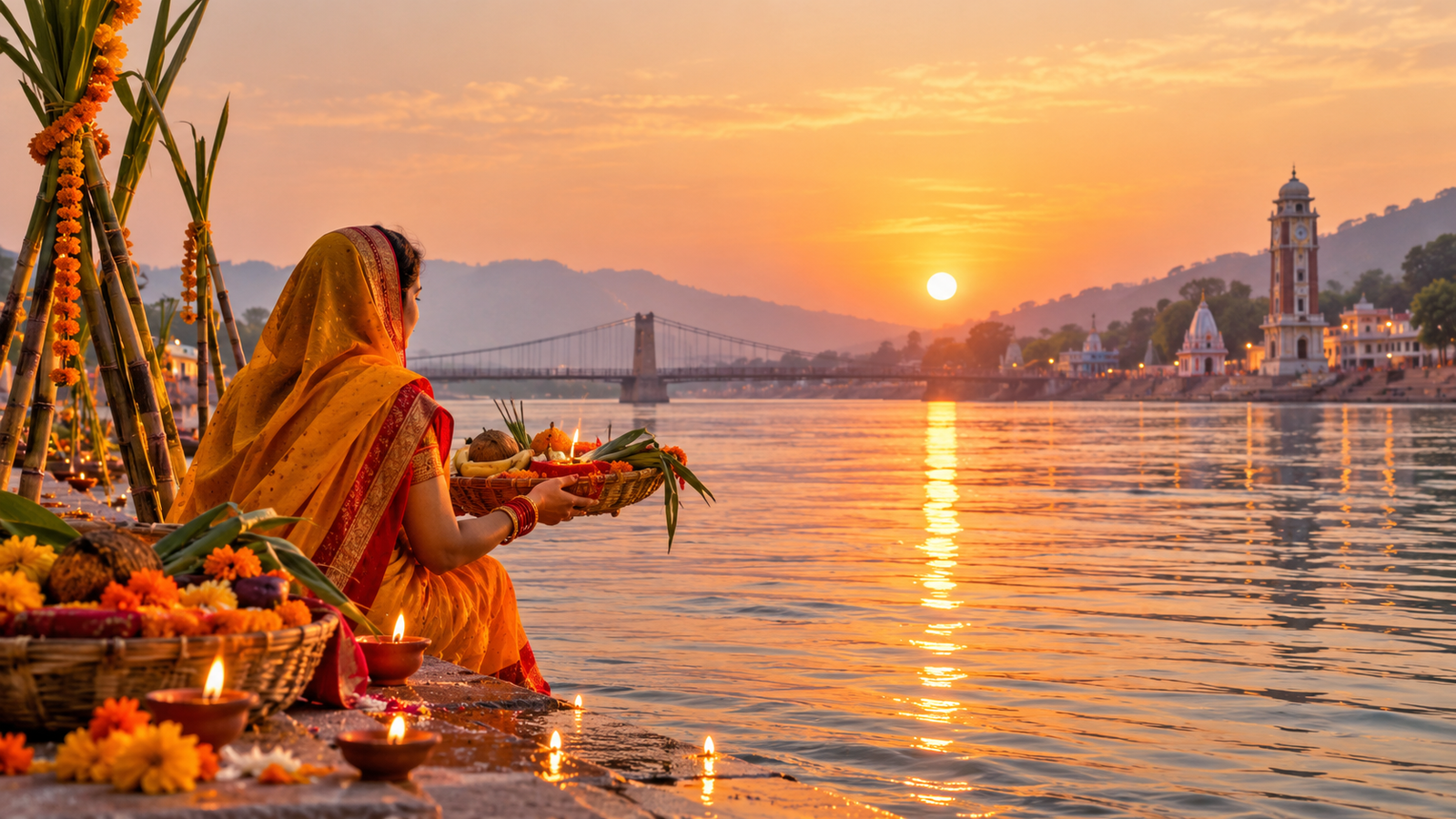
Day 3: Sandhya Arghya. This is the most visually striking day. Devotees, many of them women, stand in water and offer arghya (water and offerings) to the setting sun. The ghats fill with lamps, fruit baskets, and sugarcane arranged on bamboo baskets called soop or daura.
Day 4: Usha Arghya. Before dawn, devotees return to the water to offer prayers to the rising sun. The fast ends with the sunrise, and families share prasad. This moment is often the emotional peak of the festival.
Sacred Ganga Ghats to Visit
Haridwar has many ghats, but a few stand out for their history and their suitability for watching the rituals.
Har ki Pauri is the best-known ghat and the spiritual centre of the city. It is especially busy during the evening Ganga Aarti, when lamps float on the water and hymns echo along the banks. During Chhath, the ghat’s wide steps and crowds create a lively scene. Arrive early for the sunset and sunrise offerings, as the best spots fill quickly.
Quieter ghats along the river offer more space and a calmer experience. These stretches are less crowded than Har ki Pauri and give you a better view of families performing their rituals without feeling pushed aside. Ask a local guide or your hotel for suggestions, and check the current access conditions, since riverbank routes can change during the festival.
Ghats near the Kankhal area are also worth exploring. Kankhal is close to Haridwar’s old town and has its own temples and sacred water spots. Visiting in the early morning gives you a more peaceful look at the river.
Whichever ghat you choose, check the water level and the path before you go, and wear footwear that is easy to remove and grips well on wet stone.
Etiquette for Visitors
Chhath is a religious observance, not a spectacle, so your behaviour matters.
- Ask before photographing. Devotees, especially women in prayer, may not want to be photographed. Take wide shots from a respectful distance and avoid using flash near the water.
- Keep a distance during prayers. Do not walk through the lines of devotees standing in the river.
- Dress modestly. Light, covered clothing is appropriate at the ghats. Many visitors wear simple cotton clothes that dry quickly.
- Do not litter. Flowers, leaves, and offerings are part of the ritual, but plastic and packaging are not. Carry a small bag for your waste.
- Keep children close. The ghats are crowded and the current can be strong. Stay near the steps and away from deep water.
- Respect the fast. If you are staying with a family that is fasting, ask what they would like from you and avoid eating or drinking in front of them during the fast.
Choosing a Riverside Stay
Staying near the river makes a big difference during Chhath. You can reach the ghats before dawn, avoid long traffic delays, and step out for the sunset offering without a long walk. When you compare options, focus on these points.
Distance to the ghat. Walking distance matters most. A stay within a short walk of the river lets you join the Usha Arghya at dawn without a rushed taxi ride through crowded roads.
River view or sound of the water. Rooms that overlook the Ganga, or at least the river’s sound, add to the spiritual atmosphere. Ask for a quieter room away from the main road.
Early access and flexible timing. Festival mornings start very early. Check whether the property can help with early check-in, breakfast before sunrise, or a simple vegetarian meal after the fast.
Vegetarian and simple food. Many devotees prefer pure vegetarian meals and foods prepared without onion or garlic during the fast. Confirm the kitchen’s practices before you book.
Quiet and cleanliness. Look for rooms that are calm at night and well kept. After a long day at the ghats, rest matters.
Help with local information. Staff who know the ghats, the timing of the rituals, and safe routes can save you time and stress.
Practical Tips for a Smooth Visit
- Plan the timing. Sunrise and sunset times change through the season. Check local listings or ask your stay for the exact timing before each arghya.
- Arrive early. Crowds build quickly, especially on the evening of Sandhya Arghya and the morning of Usha Arghya.
- Dress in layers. Late autumn mornings in Haridwar can be cool, and the river air adds to the chill.
- Carry essentials. Bring a water bottle, a small torch, tissues, and a light shawl.
- Keep your valuables safe. Use a secure bag and keep phones and wallets close in crowds.
- Move with the crowd. At peak times, moving slowly and steadily keeps everyone safe.
A Festival That Connects People and Place
Chhath in Haridwar is more than a religious event. It is a meeting of cultures, a reminder of gratitude, and a chance to see how a river can hold a community together. Whether you are a devotee, a family member joining a relative, or a traveller drawn by the scenery and ritual, the festival rewards patience and respect. Plan your visit around the four days, choose a stay that brings you close to the water, and take time to watch the sun rise and set over the Ganga. The experience stays with you long after the lamps have gone out.