
Delhi’s relentless pace — the traffic chaos, the pollution, the constant demands on time and attention — creates an almost physical need for escape among residents. But escape doesn’t require flying to distant islands or trekking into remote wilderness. Sometimes it requires only a four-hour drive north to Haridwar, where the Ganges River emerges from the Himalayas carrying with it not just water but a quality of renewal that the plains desperately lack.
Haridwar functions as Delhi’s pressure valve. It offers what the capital city fundamentally cannot: silence, spiritual dimension, the presence of something larger than oneself, and the permission to slow down. This guide explores why Haridwar has become Delhi’s preeminent weekend destination and provides concrete frameworks for making the most of a 48-hour escape.
Why Haridwar Is Delhi’s Perfect Weekend Destination
The Geography of Relief
Haridwar sits at 340 meters elevation — high enough to feel climatically distinct from Delhi’s scorching plains but not so high as to require acclimatization. The 220-kilometer distance creates psychological separation without logistical burden. You can leave Delhi Friday evening and be settled into Haridwar by 9 PM, creating a full 36-hour genuine escape window.
The crucial difference from other Delhi escapes:
- Shimla/Mussoorie: 6–7 hours driving; requires taking Friday off work
- Agra: 3.5 hours but touristic; lacks spiritual dimension
- Pushkar/Jaipur: 4–5 hours; desert landscape doesn’t provide the physical relief of mountain proximity
- Haridwar: 4 hours; combines spiritual significance, natural beauty, and manageable distance
The Spiritual Decompression
Delhi residents experience spiritual hunger that few cities acknowledge. The constant sensory overload, the competitive pace, the relentless material focus — all create a hunger for something transcendent that conventional leisure cannot satisfy.
Haridwar provides this almost immediately. Within hours of arrival, you’ve participated in ancient rituals (Ganga Aarti), walked sacred ground (Har-Ki-Pauri), and entered a cultural ecosystem where the spiritual is assumed to be real. The effect is decompression at a level deeper than simple relaxation.
The Natural Beauty Without Extreme Exertion
Unlike mountain destinations requiring acclimatization or hiking capability, Haridwar offers Himalayan proximity without physical strain. You can feel mountain presence, see Himalayan foothills clearly, and experience the Ganges descending from those mountains — all while remaining accessible to people of varying fitness levels.
Three Weekend Getaway Frameworks
Depending on your primary motivation — spiritual, adventure-focused, or wellness-oriented — Haridwar delivers fundamentally different experiences.
Framework 1: The Spiritual Pilgrim Escape
Best for: Those seeking contemplative retreat, spiritual deepening, connection to Hindu traditions
Friday Evening:
- Leave Delhi 6–7 PM (avoid rush hour)
- Arrive Haridwar 10–11 PM
- Settle into riverside hotel, sleep early
Saturday:
- 5:30 AM: Rise, light breakfast, travel to Har-Ki-Pauri ghats
- 6:00–7:30 AM: Sunrise meditation at ghats (pre-aarti calm)
- 8:00 AM: Return for full breakfast
- 10:00 AM–12:30 PM: Chandi Devi Temple visit (ropeway + darshan)
- 1:00 PM: Lunch at heritage haveli or hotel
- 3:00–5:00 PM: Rest, yoga, or Ayurvedic treatment at hotel
- 6:00–6:30 PM: Evening Ganga Aarti (the centerpiece experience)
- 8:00 PM: Dinner, evening meditation or journaling
Sunday:
- 6:00–7:00 AM: Optional sunrise yoga
- 8:00 AM: Breakfast
- 9:00–11:30 AM: Mansa Devi Temple visit
- 12:00 PM: Lunch
- 2:00–3:30 PM: Sapt Sarovar (Seven Sacred Lakes) walk or smaller temple visits
- 4:00 PM: Begin return to Delhi
- 8:00–9:00 PM: Arrive Delhi
Why this framework works: Focuses time on genuine spiritual practices rather than forcing adventure activities. Includes the Ganga Aarti (non-negotiable for first-time Haridwar visitors) while leaving space for integration and personal reflection.
Framework 2: The Adventure Enthusiast Escape
Best for: Those seeking outdoor activities, adrenaline experiences, nature immersion
Friday Evening:
- Leave Delhi 6 PM
- Arrive Haridwar 10 PM, settle in
Saturday:
- 7:00 AM: Breakfast
- 8:30 AM–10:30 AM: White-water rafting (Grade II rapids, beginner-friendly)
- 11:00 AM–1:00 PM: Rajaji National Park jeep safari (potential wildlife sighting)
- 1:30 PM: Lunch
- 3:00–5:00 PM: Rock climbing, paragliding, or forest trekking (depending on season/preference)
- 6:00–6:30 PM: Evening Ganga Aarti (experience it even if not spiritually focused)
- 8:00 PM: Dinner, early rest
Sunday:
- 7:00 AM: Breakfast
- 8:00–10:00 AM: Forest nature walk (easier pace than Saturday activities)
- 10:30 AM–12:00 PM: Chandi Devi ropeway + temple
- 12:30 PM: Lunch
- 2:00 PM: Begin return to Delhi
- 6:00–7:00 PM: Arrive Delhi
Why this framework works: Concentrates adventure activities into Saturday when energy is highest. Includes cultural/spiritual experiences (Aarti, temple visits) to balance pure activity focus. Sunday provides lighter activity allowing physical recovery.
Framework 3: The Wellness & Luxury Escape
Best for: Those seeking restoration, spa experiences, culinary excellence, contemplative luxury
Friday Evening:
- Leave Delhi 5 PM to arrive Haridwar early
- Check into luxury riverside resort (Evaara by the Ganges highly recommended)
- Early dinner, settle in
Saturday:
- 6:30–7:30 AM: Sunrise yoga on riverside terrace
- 8:00 AM: Wellness-focused breakfast (Ayurvedic menu, fresh juices)
- 9:00 AM–12:00 PM: Extended Ayurvedic treatment (abhyanga massage + shiro-abhyanga)
- 1:00 PM: Lunch with wellness consultant guidance
- 3:00–5:00 PM: Meditation retreat or personal spa time
- 5:30–6:30 PM: Gentle sunset walk along ghats
- 6:30–7:00 PM: Evening Ganga Aarti
- 8:00 PM: Dinner at resort’s specialty restaurant
- 9:00 PM: Evening sound bath or meditation session
Sunday:
- 7:00–8:00 AM: Restorative yoga
- 8:30 AM: Breakfast
- 10:00 AM–12:00 PM: Optional spa treatment or forest forest walk
- 1:00 PM: Lunch
- 2:30 PM: Begin return to Delhi
- 6:30–7:30 PM: Arrive Delhi
Why this framework works: Prioritizes restoration and contemplation over activity accumulation. Builds in recovery time recognizing that wellness is about integration, not rushed experiences. Emphasizes quality of experience over quantity.
The Essential Experience: Ganga Aarti
No Haridwar escape is complete without witnessing the Ganga Aarti at Har-Ki-Pauri. This evening ritual deserves specific attention because it fundamentally differs from other tourist activities.
What Makes Ganga Aarti Transformative
The Ganga Aarti isn’t entertainment designed for tourists. It’s a spiritual ceremony that happens regardless of observers. Tourists have been welcomed into this sacred space relatively recently — and the ceremony hasn’t compromised its authenticity to accommodate tourism.
The structure:
- 20–30 priests perform synchronized movements with 5–6 oil lamps (diyas) per priest
- Mantras chanted in Sanskrit create a sonic landscape unlike anything most urban professionals experience
- 5,000–15,000 devotees participate simultaneously
- The entire ritual lasts 20–30 minutes but feels both timeless and intensely present
Practical Guidance for First-Time Attendees
Arriving early is crucial: The 6:15 PM aarti requires arriving by 5:15–5:30 PM to secure viewing space. The earlier you arrive, the more central your position. Arriving after 5:45 PM limits you to standing in the back or side areas.
Position strategy:
- Center ghats (most crowded): Best view but more physically intense
- Upper platform areas: Good views, less crowded, requires climbing steps
- Side areas or upper terraces: Less central views but manageable crowd density
Sensory preparation: The first-time aarti experience often overwhelms in unexpected ways:
- The sound (bells, conch shells, chanting) is louder and more resonant than anticipated
- The emotional response (tears, profound calm, unexplained joy) surprises many
- The sensory intensity (crowds, movement, incense, flowers) can feel chaotic before settling into transcendence
Most first-time visitors report: Initial sensory overwhelm (first 5–10 minutes) → gradual settling into the rhythm → profound emotional release (often tears) → deep stillness
After-aarti participation: Following the main ceremony, participants typically:
- Release small oil lamps (diyas) or flower petals into the Ganges
- Collect prasad (blessed food) from priests
- Circumambulate the temple structure
- Continue standing in quiet reflection
No “correct” way to experience this: Some feel spiritual connection intensely; others find it moving but conceptually puzzling; some respond primarily to the sensory spectacle. All responses are valid. The aarti’s power lies in its authenticity, not in producing uniform experiences.
Luxury Accommodations: Evaara by the Ganges
Among Haridwar’s numerous accommodations, Evaara by the Ganges represents the luxury standard specifically designed for Delhi weekend escapes.
Why Evaara Stands Out
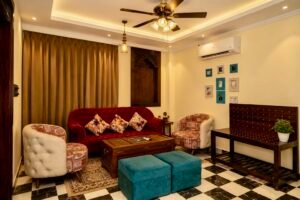
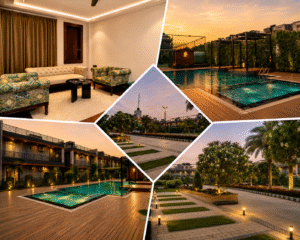
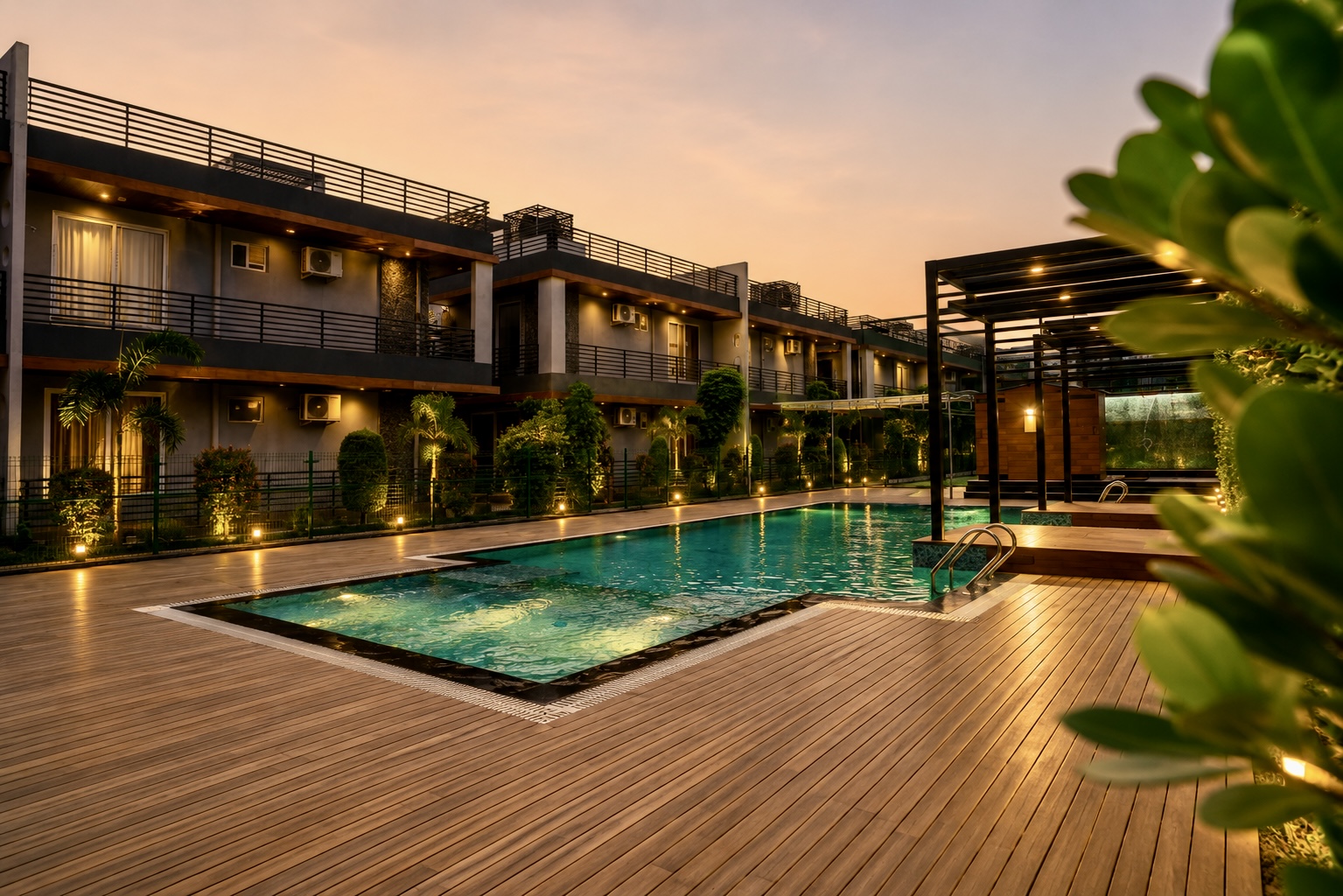
Location: Direct Ganges riverfront position, slightly outside the main Har-Ki-Pauri bazaar chaos. Close enough for easy temple access, far enough to avoid constant pilgrim traffic.
Architecture & Design:
- Contemporary design with traditional Indian design elements
- Most rooms feature river-view balconies
- Architectural language honors sacred geometry principles
- Every public space frames the Ganges as a central visual element
The Evaara Experience
Rooms & Facilities:
- Room categories: Standard river-view through premium suites
- Amenities: Modern luxury (air conditioning, premium bedding, rainfall showers) combined with spiritual considerations (meditation cushions, curated spiritual libraries)
- River access: Private steps leading to ghats, exclusive early-morning river access before main aarti crowds
Dining at Evaara:
- Multi-cuisine restaurant: Global selections alongside speciality Indian cuisine
- Riverside café: Light meals and beverages with Ganges views
- Wellness menu: Specifically designed Ayurvedic meals for guests seeking dietary alignment with spiritual practice
Wellness Offerings:
- Ayurvedic consultation: Professional practitioners provide personalized dosha assessments
- Massage & treatments: Abhyanga, shiro-abhyanga, and specialized Ayurvedic treatments
- Yoga & meditation: Guided sessions on river terraces at sunrise
- Sound baths & musical therapy: Evening sessions using traditional instruments
Guest Services:
- Spiritual guidance: Staff can arrange temple visits, explain rituals, and connect guests with local teachers
- Adventure coordination: Direct partnerships with rafting, paragliding, and safari operators
- Local cuisine education: Classes in preparing traditional Garhwali foods
- Photography assistance: Staff help capture meaningful moments without disrupting ceremonies
Why Evaara Works Specifically for Delhi Weekenders
Delhi residents arriving stressed and depleted after work weeks find Evaara immediately disarming. The combination of:
- Modern luxury infrastructure (no roughing it, no logistics stress)
- Spiritual intentionality (clear integration of sacred principles)
- Personalized service (staff understand that weekend guests need rapid decompression)
- Ease of access (2-minute walk to Har-Ki-Pauri, pre-arranged transportation)
…creates an optimal container for genuine restoration. You’re not managing logistics or seeking comfort; both are assumed, freeing attention for actual restoration.
Understanding Haridwar’s Geography & Neighborhood
Har-Ki-Pauri (The Main Ghat)
The spiritual epicenter — where the Ganga Aarti occurs and where main pilgrimage activities concentrate.
Characteristics:
- Intensely crowded, especially evenings and weekends
- Ancient temples surrounding ghats
- Traditional bazaar atmosphere with religious item shops
- Can feel chaotic to first-time visitors but represents authentic pilgrimage energy
Best for: Spiritual experience, temple visits, experiencing pilgrimage culture Drawback: Crowds, noise, limited dining/accommodation options directly on main ghats
Sapna Vihar & Upper Haridwar
The residential/luxury resort area slightly elevated from main ghats.
Characteristics:
- Quieter, less crowded
- Access to Ganges without main-bazaar intensity
- Where luxury resorts (including Evaara) typically locate
- Short walk or auto-rickshaw to Har-Ki-Pauri
Best for: Luxury travelers, those seeking balance of access and peace Benefit: You can experience main ghat energy while retreating to calm accommodation
Rajaji National Park Area
The nature-focused zone adjacent to Haridwar, encompassing forest, wildlife sanctuary, and adventure activity hubs.
Characteristics:
- 10–15 km from main Haridwar bazaar
- Quiet, nature-immersive environment
- Primary location for rafting, safaris, paragliding, trekking
- Some wilderness lodges and adventure camps locate here
Best for: Adventure-focused weekends, nature immersion Drawback: Further from main temples/aarti; requires transportation planning
Practical Weekend Logistics
Transportation from Delhi
By Personal Vehicle:
- Route: Delhi → NH 119 → Haridwar (220 km, ~4 hours)
- Driving time: 4–5 hours depending on traffic (Friday evening traffic can extend this to 5–6 hours)
- Toll: ₹900–1,200 (expressway)
- Advantage: Flexibility, stops at willingness
- Disadvantage: Driving fatigue, parking at destination
By Hired Car/Cab:
- Uber/Ola: ₹2,500–4,000 one-way (variable pricing)
- Private car service: ₹4,000–6,000 one-way through hotel concierge
- Advantage: No driving stress, professional navigation
- Disadvantage: Higher cost for return trip
By Train:
- Delhi → Haridwar Junction: Multiple trains available
- Options: Shatabdi Express (6 hours), Mail/Express trains (overnight)
- Advantage: Relaxing, scenic, budget option
- Disadvantage: Less flexible departure/arrival timing, additional ground transportation
Recommendation for most Delhi weekenders: Hire a car/driver for both directions. The elimination of driving stress is worth the modest additional expense given the goal is restoration.
Timing Your Departure
Friday Evening Departure (Recommended):
- Leave Delhi 6–7 PM (after office/work finishes)
- Arrive Haridwar 10–11 PM
- Check in, early sleep (11:30 PM–5:30 AM sleep available)
- Full 36-hour escape window
Saturday Morning Departure (Alternative):
- Leave early Saturday morning (6–7 AM)
- Arrive Haridwar 10–11 AM
- Lose Friday evening but avoid Friday traffic
- 30-hour escape window
Return on Sunday:
- Most weekenders depart Haridwar 2–4 PM Sunday
- Arrive Delhi 6–8 PM
- One work evening to settle before Monday
What to Pack
Essentials:
- Lightweight, breathable cotton clothing (Haridwar is warm most of year)
- Comfortable walking shoes (temple visits involve stepping on uneven stone)
- Dupatta/scarf (essential for women at temple visits; men usually wear shirt/kurta)
- Toiletries (luxury hotels provide basics but bring personal items)
- Medications (if any regular prescriptions)
- Phone charger + power bank
Optional but recommended:
- Sun protection (sunscreen, hat, sunglasses)
- Light layer for early morning/evening (even warm places cool after sunset)
- Spiritual items (if personally meaningful — mala beads, meditation cushion)
- Journal (the experience invites reflection)
- Camera (smartphone sufficient)
Seasonal Considerations
October–November (Autumn): Optimal Season
- Weather: Clear, cool mornings (18–22°C), warm afternoons (28–32°C), cool evenings
- Crowds: High (weekends fully booked; advance booking essential)
- Monsoon aftermath: Lush green surroundings, full Ganges flow
- Best for: All activities equally enjoyable
- Book accommodation: 3–4 weeks in advance minimum
December–February (Winter): Chilly But Beautiful
- Weather: Cold mornings (5–10°C), pleasant afternoons (18–22°C)
- Crowds: Lower than autumn (accommodation more available)
- Sky clarity: Excellent mountain views, especially early morning
- Considerations: Heavy clothing needed; early morning aarti requires bundling
- Best for: Those comfortable in cold; excellent for photography
- Book accommodation: 2 weeks in advance usually sufficient
March–May (Spring-Summer): Hot & Crowded
- Weather: Hot afternoons (35–42°C), warm mornings/evenings (25–30°C)
- Crowds: Peak tourist season; all accommodations booked Friday–Sunday
- Activities: All available; excellent for adventure (rafting, paragliding)
- Considerations: Heat can be exhausting for sedentary travelers
- Best for: Adventure-focused weekends; young, active travelers
- Book accommodation: 4–6 weeks in advance essential
June–September (Monsoon): Challenging but Dramatic
- Weather: Heavy rainfall, cooler temperatures, lush greenery
- Crowds: Minimal (monsoon discourages casual tourism)
- Water conditions: High Ganges flow (no rafting); adventure activities limited
- Considerations: Landslide risks on mountain roads; constant rainfall
- Best for: Spiritual focus only; adventure activities suspended
- Book accommodation: 1 week in advance often sufficient
Recommendation for most Delhi weekenders: October–November or December–January provide optimal balance of weather, crowd levels, and activity availability.
Haridwar’s Deeper Significance: Why It Transforms
Beyond temples and spiritual practices, Haridwar’s transformative power comes from a fundamental shift in how consciousness operates when placed in sacred geography.
The Ganges as Living Reality
In Delhi, the Ganges exists in history, mythology, and imagination. In Haridwar, it exists as physical reality — a river fundamentally different from others. Its clarity, its coldness, its palpable sense of sacred intention expressed through behavior around it (people bathing, praying, releasing flowers) — all combine to make the Ganges real in a way urban life cannot accommodate.
Many Delhi residents experience a “remembering” at Haridwar — not learning new ideas but recognizing truths they temporarily forgot in urban intensity.
The Permission to Slow Down
Haridwar operates at different temporal rhythm than Delhi. The Ganga Aarti happens at 6:15 PM whether you’re ready or not. Temples close at certain hours. The city doesn’t have rush hour. This externally imposed rhythm — rather than self-imposed productivity — creates unexpected relief.
You can’t optimize Haridwar. You can only surrender to its schedule and discover that you’re rested.
Spiritual Practice Without Ideology
One doesn’t need to believe in Hindu theology to experience Ganga Aarti’s power. Sitting among thousands of people performing synchronized devotional action creates psychological states that belief systems alone cannot generate. The power is in the practice, not necessarily in doctrinal commitment.
This allows secular visitors, interfaith couples, and agnostics to experience genuine spiritual dimension without requiring ideological agreement.
Frequently Asked Questions
Q: Do I need religious knowledge to appreciate Haridwar?
A: No. Basic respect for the sacred space and openness to experience are sufficient. Most hotels provide orientation materials. Local guides can explain ritual significance. The experience itself teaches more than any preparation could.
Q: Is it appropriate for non-Hindus to participate in Ganga Aarti?
A: Absolutely yes. The Ganga Aarti welcomes all visitors respectfully. Wear modest clothing, remove shoes at temple entrances, and participate with genuine reverence rather than tourist detachment. Priests specifically appreciate non-Hindu participation as genuine spiritual openness.
Q: What if I’m not spiritual/religious?
A: Haridwar works for non-believers as cultural experience, nature escape, and adventure destination. The aarti is visually stunning regardless of spiritual framework. Temple architecture is beautiful. The Ganges walk is meditative even without religious context. Many secular Delhi residents find transformation through the experience rather than ideology.
Q: Can I visit Haridwar during monsoon?
A: Yes, but with limitations. Adventure activities (rafting, paragliding) are suspended. Roads can experience temporary closures. But monsoon offers unique beauty — lush green landscapes, misty mountains, fewer crowds. It’s excellent for purely spiritual focus but not for those wanting adventure.
Q: How do I ensure my weekend is restorative rather than rushed?
A: Prioritize fewer activities, more reflection. A single good meal is better than trying multiple restaurants. One good massage is better than visiting five temples. One hour of genuine meditation is better than checking off ten sites. Evaara’s model of integrated wellness versus activity accumulation represents the optimal approach.
Q: What if I find the crowds overwhelming?
A: Several options: Visit on weekdays (Tuesday–Thursday) when Haridwar quiets significantly. Stay at upper hotels (like Evaara) and take private paths to ghats. Visit smaller temples (Mansa Devi, Chandi Devi) rather than main Har-Ki-Pauri. Experience aarti from upper platforms rather than main crowd. Haridwar accommodates different tolerance levels if you plan strategically.
Q: Can I combine Haridwar with Rishikesh?
A: Easily. Rishikesh sits 10 km from Haridwar (15–20 minutes by car). Many weekend escapes include both — Haridwar for Ganga Aarti and pilgrimage, Rishikesh for yoga classes and ashram stays. A 3-day weekend could accommodate both comfortably.
Q: What’s the best hotel for my specific needs?
A: Evaara by the Ganges excels for luxury seekers wanting integrated wellness experience. Rajaji National Park lodges work for adventure-focused visitors. Smaller heritage properties near main ghats suit budget pilgrims. Your priorities (luxury vs. budget, spiritual focus vs. adventure, proximity to temples vs. nature immersion) should determine choice.
Conclusion: Why Delhi Needs Haridwar
Haridwar functions for Delhi as what oceans function for landlocked countries — a fundamental dimension of life that the enclosed environment cannot provide. The spiritual presence, the natural beauty, the temporal slowness, the permission to be something other than productive — these aren’t luxury options for Delhi residents; they’re necessities.
A weekend in Haridwar isn’t escape from real life; it’s recovery of life that urban intensity temporarily obscures. You return to Delhi not enlightened but restored — a subtle but crucial distinction. The difference between enlightenment (permanent transformation) and restoration (temporary recovery of capacity) matters. Enlightenment is rare. Restoration is what weekends are for.
The 220-kilometer distance creates psychological separation without logistical burden. Four hours of driving isn’t a pilgrimage; it’s accessible restoration. Ganga Aarti isn’t cult-like; it’s beautiful ceremony anyone can witness. Luxury resorts like Evaara ensure physical comfort while spiritual seeking continues. The combination — accessibility plus profundity, luxury plus tradition, short escape plus genuine restoration — makes Haridwar the preeminent weekend destination for Delhi residents.
Next Friday evening, when office stress peaks and the city feels like it’s squeezing life out of you, remember: the Ganges is only four hours away.