For decades, the quintessential vacation conjured images of sandy beaches, azure waters, and leisurely days spent sunbathing by the ocean. Beach destinations dominated travel itineraries, promising relaxation, recreation, and escape from daily routines. However, a profound shift is reshaping global tourism patterns. Increasingly, travelers are gravitating toward destinations offering cultural depth, spiritual enrichment, and authentic experiences—with ancient temples, sacred sites, and heritage locations emerging as preferred choices over traditional beach resorts. This cultural travel renaissance reflects changing traveler priorities, evolving definitions of meaningful tourism, and a growing hunger for experiences that nourish the soul alongside the senses. In India, this trend has brought renewed attention to spiritual destinations along the Ganges, where properties like Evaara by the Ganges, a premier luxury resort Uttarakhand has to offer, perfectly embody the convergence of cultural authenticity and contemporary comfort.
The Cultural Travel Revolution
The transformation of global tourism from purely recreational pursuits toward culturally immersive experiences represents one of the most significant trends in the travel industry. According to recent tourism research, cultural and heritage tourism now accounts for approximately 40% of all international travel, with growth rates consistently outpacing traditional beach tourism. This shift isn’t merely about changing destinations—it reflects fundamental evolution in why people travel and what they seek from their journeys.
Modern travelers, particularly millennials and Generation Z, increasingly view travel as an investment in personal growth rather than simple escapism. They seek experiences that expand perspectives, deepen understanding of diverse cultures, and create meaningful connections with places and people. Temples, sacred sites, and heritage destinations offer precisely these opportunities—spaces where history comes alive, spiritual traditions continue unbroken across centuries, and visitors can engage with living cultures in authentic ways.
India, with its extraordinary tapestry of religious diversity, architectural heritage, and spiritual traditions, sits at the epicenter of this cultural travel boom. From the golden temples of Amritsar to the cave temples of Ajanta and Ellora, from the temple complexes of Tamil Nadu to the sacred ghats of Varanasi and Haridwar, India’s spiritual landscape attracts millions of international and domestic travelers annually, with numbers growing substantially year after year.
Why Temples Are Capturing Traveler Imagination
Spiritual Seeking in Secular Times
Paradoxically, as societies become increasingly secular and technology-driven, many individuals experience growing spiritual hunger. The constant connectivity, information overload, and rapid pace of modern life create existential questions that material success alone cannot answer. Temples and sacred sites offer respite from this frenetic existence—sanctuaries where contemplation, meditation, and spiritual exploration become possible.
Unlike beach destinations that primarily offer physical relaxation, temple tourism addresses deeper psychological and spiritual needs. Visitors to sacred sites often describe transformative experiences—moments of clarity, profound peace, or spiritual awakening that continue influencing their lives long after returning home. This potential for meaningful transformation explains why temple destinations increasingly outperform beach resorts in visitor satisfaction surveys and repeat visitation rates.
Authentic Cultural Immersion
Beach resorts, particularly in heavily touristy areas, often create homogenized experiences disconnected from local culture. Visitors might spend entire vacations in resort bubbles experiencing standardized international hospitality that could exist anywhere. Temple tourism, conversely, inherently connects travelers with authentic local culture, traditions, and communities.
Visiting temples means witnessing daily religious practices, participating in ancient rituals, encountering local devotees, and experiencing living traditions unchanged across generations. This authenticity creates richer, more memorable experiences than choreographed cultural shows or sanitized heritage presentations common in conventional resort tourism.
Properties like Evaara by the Ganges enhance this cultural immersion by serving as gateways to authentic spiritual experiences. This exceptional Haridwar resort combines proximity to sacred sites with knowledgeable guidance, helping guests navigate cultural nuances and participate meaningfully in spiritual traditions while providing the comfort and amenities expected from a luxury resort Uttarakhand travelers deserve.
Architectural and Historical Significance
Temples represent some of humanity’s greatest architectural achievements. From the intricate stone carvings of Khajuraho to the towering gopurams of Madurai, from the rock-cut magnificence of Ellora to the riverside temples of Haridwar, these structures showcase extraordinary craftsmanship, engineering innovation, and artistic vision that captivate architecture enthusiasts, history buffs, and casual visitors alike.
Each temple tells stories—of the civilizations that built them, the artistic traditions they embody, the historical events they witnessed, and the spiritual philosophies they express in stone. This layered significance creates educational opportunities that beach destinations simply cannot match. Visitors leave temple destinations not just relaxed but enriched, having learned about history, art, religion, and culture in deeply engaging ways.
Photography and Social Media Appeal
The visual aesthetics of temples provide compelling content for social media-savvy travelers. Ornate architecture, colorful rituals, dramatic settings, and atmospheric lighting create photograph opportunities that beach selfies cannot rival in terms of uniqueness and cultural resonance. In an era where travel experiences are shared and validated through social media, the distinctive visual appeal of temple tourism drives significant interest, particularly among younger demographics.
The Ganges itself offers extraordinary photographic opportunities—the evening aarti ceremonies with their flickering lamps and devotional fervor, the sunrise over the sacred river, the architectural beauty of ghats descending to the water. Staying at a Ganga river luxury resort like Evaara by the Ganges positions travelers perfectly to capture these magical moments while enjoying sophisticated comfort.
India’s Temple Tourism Boom
India’s temple tourism sector has experienced remarkable growth, with several factors driving this expansion:
Improved Infrastructure and Accessibility
Government initiatives have substantially improved infrastructure around major temple destinations. Better roads, enhanced airport connectivity, upgraded railway services, and modernized facilities make temple towns more accessible than ever before. Cities like Haridwar, once perceived as lacking tourist infrastructure, now offer world-class accommodations including luxury properties such as Evaara by the Ganges, this premier riverside resort Uttarakhandhas recently welcomed.
Heritage Conservation and Restoration
Increased investment in temple conservation and heritage site restoration has improved visitor experiences while preserving cultural treasures for future generations. Well-maintained sites with informative signage, guided tours, and interpretive centers enhance appreciation and understanding, making temple tourism more accessible to international visitors and those unfamiliar with Hindu traditions.
Spiritual Wellness Tourism
The global wellness tourism boom has created natural synergies with temple destinations. Travelers seeking yoga retreats, meditation courses, Ayurvedic treatments, and holistic health experiences increasingly choose spiritual destinations like Rishikesh and Haridwar that offer authentic wellness traditions within culturally rich contexts.
Evaara by the Ganges exemplifies this convergence, functioning as both a luxury resort Uttarakhand visitors seek and a spiritual retreat Uttarakhand provides. The property offers yoga sessions overlooking the Ganges, meditation spaces, Ayurvedic spa treatments, and spiritual guidance—all within an environment of contemporary luxury that doesn’t compromise authentic cultural connection.
Domestic Tourism Growth
India’s expanding middle class has fueled domestic tourism growth, with temple destinations ranking among the most popular choices. For many Indian families, pilgrimages and visits to sacred sites combine religious devotion with family bonding and vacation experiences. This domestic demand has catalyzed infrastructure development and service quality improvements that benefit international travelers as well.
Haridwar: Where Spirituality Meets Contemporary Comfort
Haridwar, one of India’s seven holiest cities, perfectly illustrates temple tourism’s growing appeal. Situated where the Ganges emerges from the Himalayas onto the plains, Haridwar has attracted pilgrims for millennia. Today, it welcomes not just traditional devotees but also cultural tourists, wellness seekers, and travelers searching for authentic spiritual experiences.
The evening Ganga Aarti at Har Ki Pauri represents one of India’s most spiritually moving spectacles. As thousands gather along the ghats, priests perform synchronized rituals with fire, bells, and devotional songs echoing across the water. The sight of countless oil lamps floating downstream, carrying prayers and blessings, creates unforgettable experiences that no beach sunset can rival in emotional and spiritual impact.
Yet Haridwar’s appeal extends beyond religious ceremonies. The surrounding Himalayan foothills offer trekking opportunities, the nearby Rajaji National Park provides wildlife experiences, and the proximity to Rishikesh—the yoga capital of the world—creates opportunities for wellness pursuits. This combination of spiritual, natural, and wellness attractions explains why Haridwar increasingly outperforms beach destinations in visitor growth and satisfaction metrics.
Evaara by the Ganges: Redefining Spiritual Luxury
Evaara by the Ganges represents the evolution of temple tourism accommodations, addressing a long-standing challenge in spiritual tourism—the scarcity of luxury accommodations that respect and enhance rather than compromise spiritual authenticity. Traditional temple towns often offered only basic lodging options, while luxury resorts existed primarily in beach or hill station destinations. This gap deterred travelers seeking both spiritual depth and contemporary comfort.
As the finest luxury resort Uttarakhand has developed for spiritual travelers, Evaara by the Ganges bridges this divide magnificently. The property combines sophisticated design, premium amenities, and attentive service with authentic spiritual experiences, cultural immersion, and direct Ganges access. This integration creates something rare—a Haridwar resort that serves equally well as a spiritual sanctuary and a luxury retreat.
Location and Setting
Positioned along the sacred Ganges with panoramic mountain views, Evaara by the Ganges offers the tranquil beauty that makes it an exceptional riverside resort Uttarakhand travelers appreciate. The sound of flowing water, the sight of pilgrims performing rituals along the ghats, and the spiritual energy permeating the environment create an atmosphere conducive to reflection, meditation, and inner peace.
Yet the property maintains sufficient distance from Haridwar’s bustling center to ensure tranquility and privacy—allowing guests to engage with spiritual activities at their own pace while retreating to peaceful luxury when desired. This balance makes Evaara by the Ganges ideal for both serious spiritual seekers and casual cultural tourists.
Accommodations and Amenities
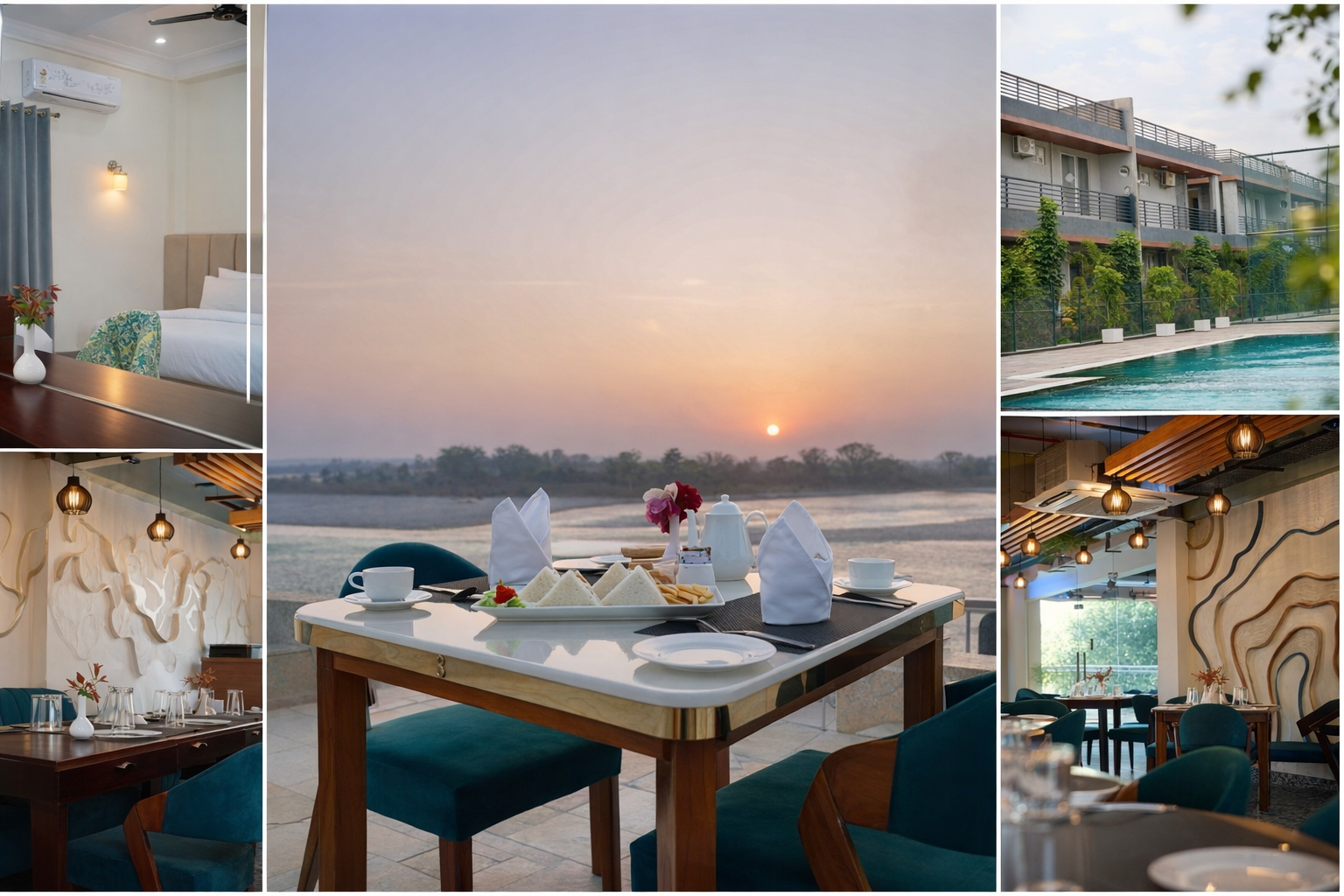
The resort features elegantly appointed rooms and suites designed to reflect local architectural traditions while incorporating contemporary luxury. Large windows frame Ganges and Himalayan views, private balconies provide meditation spaces, and carefully curated interiors blend traditional craftsmanship with modern comfort.
Amenities include a world-class spa offering Ayurvedic treatments and therapeutic massages, infinity pools overlooking the river, yoga pavilions for sunrise sessions, meditation gardens, fitness facilities, and multiple dining venues serving both local Uttarakhandi cuisine and international fare. These facilities establish Evaara by the Ganges as a true luxury resort Uttarakhand can proudly showcase, rivaling the finest beach resorts in amenity quality while offering infinitely richer cultural context.
Spiritual and Cultural Programming
What distinguishes Evaara by the Ganges from conventional luxury resorts is its comprehensive spiritual and cultural programming. The property organizes guided visits to Haridwar’s major temples, facilitates participation in Ganga Aarti ceremonies, arranges meetings with spiritual teachers, offers yoga and meditation instruction at all levels, and provides insights into Hindu philosophy and practices.
These programs transform the resort from merely a place to stay into a genuine spiritual retreat Uttarakhand offers—a space where guests can explore spiritual dimensions in supportive, knowledgeable environments without pressure or dogma. Whether seeking deep spiritual experiences or simply cultural understanding, guests find appropriate guidance and resources.
Sustainable and Responsible Tourism
Evaara by the Ganges demonstrates commitment to environmental sustainability and community responsibility befitting its sacred riverside location. Water conservation measures, waste management systems, renewable energy utilization, and support for local communities reflect understanding that true luxury includes environmental and social responsibility.
The resort employs local staff, sources from regional suppliers, supports traditional craftspeople, and contributes to Ganges conservation efforts. This responsible approach resonates with contemporary travelers who increasingly consider destinations’ and properties’ environmental and social impacts when making travel choices.
The Broader Implications of Cultural Travel’s Rise
The shift toward temple and cultural destinations over beach tourism carries significant implications for the global travel industry and destination communities:
Economic Diversification
Temple tourism helps economically diversify regions traditionally dependent on agriculture or limited industries. The influx of visitors creates employment in hospitality, guiding, transportation, handicrafts, and services, raising living standards and creating opportunities for local populations.
Properties like Evaara by the Ganges serve as economic anchors, providing quality employment, supporting supply chains, and demonstrating that spiritual destinations can support world-class tourism infrastructure.
Cultural Preservation
Increased tourism interest creates economic incentives for cultural preservation. When temples, traditions, and heritage sites generate tourism revenue, communities and governments invest more readily in their conservation and continuation. This dynamic helps preserve cultural treasures that might otherwise deteriorate through neglect.
Cross-Cultural Understanding
Temple tourism facilitates cross-cultural understanding in ways beach tourism rarely achieves. Visitors to sacred sites engage with different worldviews, religious practices, and cultural values, fostering tolerance, appreciation, and understanding across cultural boundaries. In an increasingly polarized world, these experiential encounters with diverse cultures carry significance extending far beyond individual vacations.
Redefining Luxury
The success of properties like Evaara by the Ganges is redefining luxury itself. Contemporary travelers increasingly measure luxury not just by thread counts and amenities but by authenticity, meaning, and transformative potential. A Ganga river luxury resort that facilitates genuine spiritual experiences while providing impeccable comfort represents luxury’s evolution—from mere material indulgence toward holistic enrichment of body, mind, and spirit.
The Future of Cultural and Temple Tourism
As cultural travel continues outpacing beach tourism, several trends will likely shape the sector’s evolution:
Technology Integration: Virtual reality previews, augmented reality historical reconstructions at heritage sites, and digital guides will enhance visitor experiences while preserving site integrity.
Wellness Integration: The convergence of spiritual tourism, wellness travel, and luxury hospitality will intensify, with more properties following the Evaara by the Ganges model of integrating authentic spiritual experiences with premium wellness amenities.
Sustainable Development: Increasing awareness of over-tourism’s negative impacts will drive more sustainable development models that balance tourism economic benefits with cultural and environmental preservation.
Personalization: Travelers will demand increasingly personalized spiritual and cultural experiences rather than one-size-fits-all temple tours, pushing properties to offer customized programming addressing individual interests and spiritual orientations.
Authenticity Standards: As cultural tourism grows, maintaining authenticity will become increasingly challenging and important. Properties and destinations that successfully balance accessibility with authenticity—as Evaara by the Ganges does—will thrive.
Conclusion
The ascendance of temple and cultural destinations over traditional beach tourism reflects profound shifts in traveler values and priorities. Modern tourists increasingly seek experiences offering not just relaxation but meaning, not merely pleasure but transformation, not simple entertainment but authentic engagement with diverse cultures and spiritual traditions. Temples, with their architectural magnificence, spiritual significance, cultural richness, and historical depth, provide precisely these multidimensional experiences that beach destinations struggle to match.
India’s temple tourism boom, particularly in destinations like Haridwar along the sacred Ganges, demonstrates this trend’s power and potential. Properties like Evaara by the Ganges—functioning simultaneously as a luxury resort Uttarakhand can showcase internationally, an authentic Haridwar resort serving spiritual seekers, a spectacular Ganga river luxury resort with unmatched settings, a peaceful riverside resort Uttarakhand nature lovers appreciate, and a genuine spiritual retreat Uttarakhand provides for transformation—represent the future of cultural tourism.
This evolution doesn’t diminish beach tourism’s appeal but rather expands the definition of valuable travel experiences. As travelers increasingly recognize that the most memorable journeys nourish souls alongside bodies and expand minds alongside horizons, cultural and temple tourism will continue growing, drawing visitors toward ancient sacred sites where human spirituality, artistic achievement, and cultural continuity create experiences no amount of sand and surf can replicate. In this new tourism paradigm, the real luxury lies not in isolation from local culture but in deep, authentic immersion within it—and properties like Evaara by the Ganges illuminate the path forward.