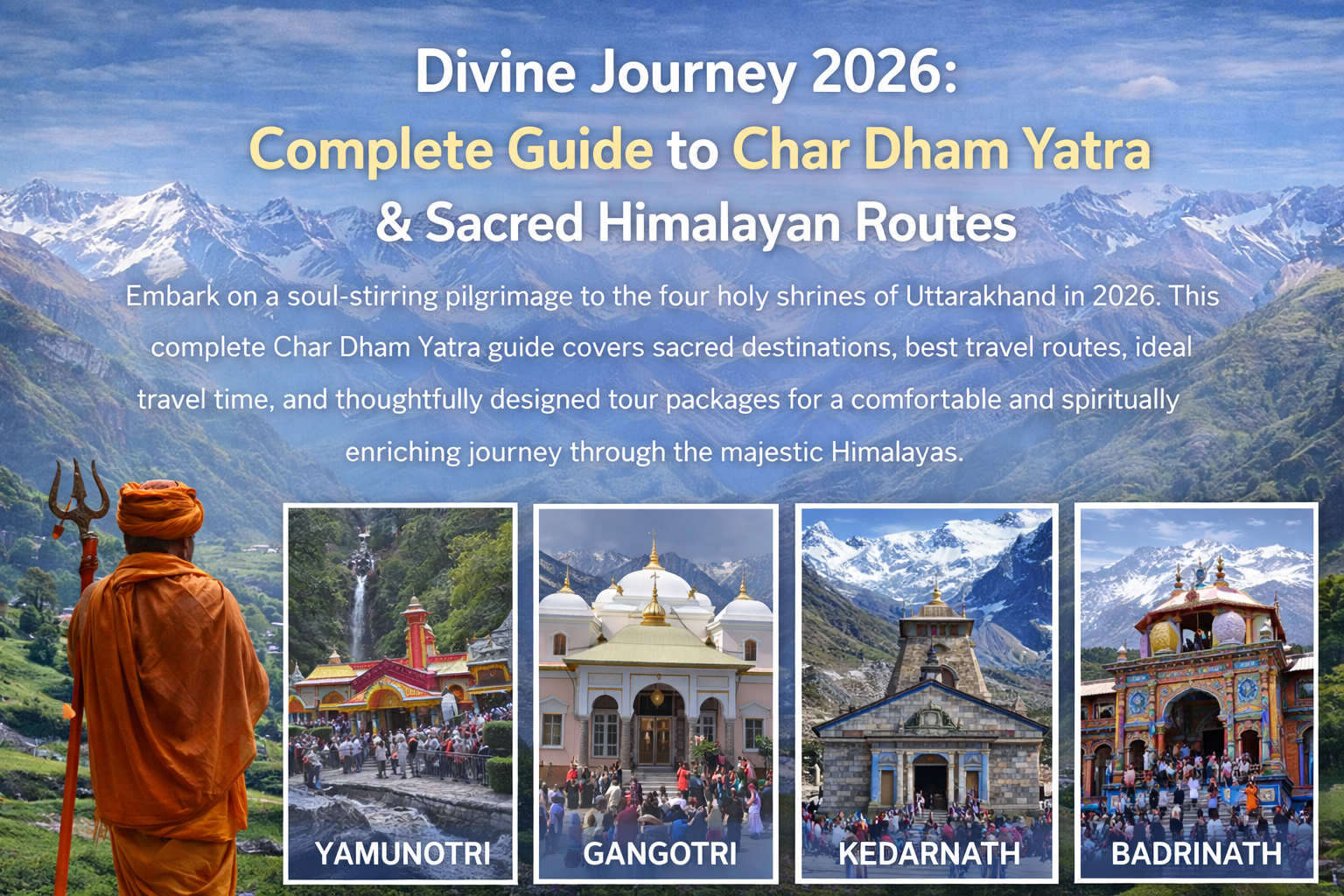
The Char Dham Yatra stands as one of Hinduism’s most revered pilgrimages, drawing millions of devotees to the sacred Himalayan shrines of Uttarakhand each year. As 2026 approaches, pilgrims worldwide are preparing for this transformative spiritual journey that takes them through breathtaking mountain landscapes to four divine abodes: Yamunotri, Gangotri, Kedarnath, and Badrinath. This comprehensive guide will help you plan a meaningful pilgrimage while ensuring comfort, safety, and spiritual fulfillment throughout your sacred journey.
Understanding the Char Dham Yatra: A Sacred Circuit
The term “Char Dham” translates to “four abodes,” referring to the four holy sites nestled in the Garhwal Himalayas of Uttarakhand. Hindu tradition holds that undertaking this pilgrimage washes away sins and paves the path to moksha (liberation). The circuit follows a specific geographical and spiritual logic, typically completed in a clockwise direction starting from the west.
Each shrine is dedicated to a specific deity and holds unique mythological significance. Yamunotri honors Goddess Yamuna, Gangotri pays homage to Goddess Ganga, Kedarnath venerates Lord Shiva, and Badrinath is dedicated to Lord Vishnu. Together, these sites represent the spiritual geography of the Himalayas, where divine energy is believed to be most accessible.
The pilgrimage season typically runs from late April or early May through October or early November, with exact opening and closing dates announced annually based on auspicious timings determined by priests. The 2026 season is expected to follow this traditional calendar, with specific dates likely to be announced in early spring. Peak crowds occur during May-June and September, while July-August brings monsoon challenges including landslides and road closures.
Haridwar: The Essential Gateway to Your Divine Journey
Every Char Dham Yatra begins and ends in Haridwar, the sacred city where the Ganges descends from the Himalayas to bless the plains. This ancient pilgrimage center serves not just as a logistical starting point but as a spiritual preparation ground where pilgrims purify themselves before undertaking the arduous mountain journey.
Haridwar’s significance extends beyond mere geography. Taking a holy dip at Har Ki Pauri, the main ghat where Lord Vishnu is believed to have left his footprint, is considered essential for cleansing the soul before the pilgrimage. The evening Ganga Aarti at this sacred spot creates an atmosphere of profound devotion, with thousands of lamps floating on the river as priests perform synchronized rituals accompanied by devotional songs and ringing bells.
Preparing for Pilgrimage with Comfort and Wellness
Modern pilgrims increasingly recognize the importance of proper rest, nutrition, and mental preparation before embarking on the physically demanding Char Dham circuit. This is where luxury riverfront accommodation in Haridwar plays a crucial role in setting the right foundation for your spiritual journey.
Among the premier properties in Haridwar, Evaara by the Ganges stands out as an exceptional choice for pilgrims seeking to combine spiritual preparation with physical wellness. This luxury spa resort in Haridwar offers comprehensive pre-pilgrimage wellness programs designed specifically for those about to undertake the challenging mountain journey.
Located along the serene banks of the Ganges, Evaara by the Ganges provides the perfect environment for spiritual and physical preparation. The property’s elegantly appointed rooms and suites offer breathtaking views of the sacred river, creating a tranquil atmosphere conducive to meditation and mental preparation. As one of the best hotels in Haridwar near Ganga River for family, it caters perfectly to multigenerational pilgrim groups, ensuring everyone from children to elders finds comfort and appropriate facilities.
The wellness programs at this wellness and yoga retreat by the Ganges are particularly valuable for pilgrimage preparation. Expert yoga instructors guide guests through asanas and breathing techniques that build stamina and flexibility—essential for the high-altitude treks and long hours of travel ahead. Daily pranayama sessions strengthen respiratory capacity, crucial for managing the thin mountain air at elevations exceeding 10,000 feet.
The Ayurvedic spa at Evaara by the Ganges offers therapeutic treatments that prepare the body for physical exertion. Abhyanga (full-body oil massage) improves circulation and reduces muscle stiffness, while specialized treatments like Pada Abhyanga (foot massage) strengthen legs for the treks ahead. Consultation with resident Ayurvedic physicians results in personalized dietary recommendations and herbal supplements to boost immunity and energy levels.
For families planning the pilgrimage together, the best hotels in Haridwar near Ganga River for family like Evaara provide essential services including arranging permits, booking helicopter services, organizing vehicle rentals, and connecting pilgrims with experienced guides. The property’s concierge team stays updated on route conditions, weather forecasts, and shrine opening schedules, providing valuable intelligence for planning.
As the best resort near Rajaji National Park, Evaara by the Ganges also offers guests the opportunity to acclimatize to nature’s proximity through safari experiences. These excursions into nearby Rajaji National Park help prepare pilgrims psychologically for the wilderness they’ll encounter in the high Himalayas while providing enjoyable family experiences before the more rigorous journey begins.
The Sacred Circuit: Understanding Each Dhaam
Yamunotri: The Source of Yamuna
The pilgrimage traditionally begins at Yamunotri, the westernmost shrine dedicated to Goddess Yamuna. Located at an altitude of 3,293 meters, the temple marks the source of the Yamuna River, India’s second most sacred river after the Ganges.
The journey to Yamunotri involves a 6-kilometer trek from Janki Chatti, the last motorable point. The trail, though well-maintained, climbs steadily through mountain terrain and requires reasonable fitness levels. Ponies and palanquins are available for those unable to walk the entire distance. The trek typically takes 3-4 hours depending on pace and acclimatization.
At Yamunotri, pilgrims bathe in the hot springs of Surya Kund before entering the temple for darshan (viewing of the deity). Many cook rice and potatoes in the thermal springs’ cloth bundles as offerings, which are then distributed as prasad (blessed food). The temple itself is a modest stone structure, but its location amid towering peaks and the sound of the rushing Yamuna create a profoundly spiritual atmosphere.
Gangotri: Where Ganga Descends to Earth
The second stop is Gangotri, situated at 3,100 meters, where Goddess Ganga descended from heaven to earth in response to King Bhagirath’s prayers. The temple, built by Gorkha commander Amar Singh Thapa in the early 19th century, stands on the right bank of the Bhagirathi River, considered the main source stream of the Ganges.
Unlike Yamunotri, Gangotri is directly accessible by road, making it easier for elderly pilgrims and families. The temple town offers numerous accommodation options and facilities. The actual source of the Ganges, the Gaumukh glacier, lies 19 kilometers further up and requires a separate multi-day trek, though this is not part of the traditional Char Dham circuit.
The Gangotri temple’s spiritual energy is palpable, with the constant roar of the Bhagirathi providing a natural soundtrack to prayers and rituals. Evening aarti on the ghats creates magical moments as lamps float on the sacred waters against a backdrop of Himalayan peaks.
Kedarnath: The Abode of Lord Shiva
Kedarnath represents the most challenging portion of the yatra, both physically and emotionally. Perched at 3,583 meters, this ancient temple dedicated to Lord Shiva is one of the twelve Jyotirlingas and holds immense spiritual significance. The shrine is believed to have been established by the Pandavas and later revived by Adi Shankaracharya in the 8th century.
Reaching Kedarnath requires either a 16-kilometer trek from Gaurikund or helicopter services that operate from nearby helipads. The trek, while strenuous, takes pilgrims through spectacular mountain scenery including waterfalls, pine forests, and meadows. Well-spaced rest stops provide refreshments and shelter along the route.
The 2013 flash floods that devastated the region left the Kedarnath temple miraculously intact, reinforcing devotees’ faith in divine protection. Today, reconstruction has created better infrastructure while maintaining the area’s sacred character. The temple’s stone architecture, backdrop of snow-covered peaks, and spiritual atmosphere make the challenging journey worthwhile.
Helicopter services have made Kedarnath accessible to those unable to undertake the trek, though advance booking is essential during peak season. The brief aerial journey provides stunning mountain views and reduces travel time significantly.
Badrinath: Lord Vishnu’s Himalayan Sanctuary
The final and most accessible shrine is Badrinath, situated at 3,133 meters in the Chamoli district. Dedicated to Lord Vishnu in his Badrinarayan form, this temple is one of Hinduism’s most important pilgrimage sites and forms part of both the Char Dham circuit and the larger all-India Chota Char Dham yatra.
The temple’s distinctive architectural style features a colorful facade topped with a gold-plated roof and a distinctive conical spire. The presiding deity is a black stone idol of Lord Vishnu in a meditative pose. The temple complex includes several hot springs, with Tapt Kund being the most sacred where pilgrims bathe before darshan.
Badrinath town offers the best infrastructure among all four shrines, with numerous hotels, restaurants, and shops catering to pilgrims. The nearby Mana village, the last Indian settlement before the Tibet border, provides cultural insights and attractions including Vyas Gufa (cave) where the Mahabharata was supposedly composed.
Planning Your 2026 Char Dham Yatra
Choosing Your Route and Duration
The complete Char Dham circuit typically requires 10-12 days when done by road, including travel time from Haridwar and return. Helicopter packages reduce this to 4-5 days by eliminating road travel between shrines and the Kedarnath trek. Many pilgrims combine approaches, using helicopters for Kedarnath while traveling by road to other shrines.
The traditional sequence follows Yamunotri, Gangotri, Kedarnath, and Badrinath, moving roughly west to east. However, flexibility exists based on weather, road conditions, and personal preferences. Some pilgrims reverse the order or modify the sequence based on shrine opening schedules.
Essential Preparations and Permits
While no special permits are required for the basic pilgrimage, certain activities need advance arrangements. Helicopter bookings should be made months ahead, particularly for May-June and September slots. Online registration through the Uttarakhand government portal is recommended though not mandatory, as it helps authorities manage crowds and provide assistance if needed.
Physical preparation should begin at least two months before departure. Regular walking, stair climbing, and breathing exercises build necessary stamina. Those with pre-existing medical conditions should consult doctors and carry necessary medications in adequate quantities.
What to Pack
Essential items include:
- Warm clothing including thermals, jackets, and woolens for high altitudes
- Comfortable trekking shoes with good grip
- Rain protection gear including ponchos and waterproof bags
- Basic medical kit with altitude sickness medication, pain relievers, and personal prescriptions
- Energy foods like dry fruits, chocolate, and glucose for the treks
- Sufficient cash as ATMs are limited in mountain areas
- Valid ID proofs and photographs for registration
- Reusable water bottles and basic toiletries
Accommodation Options
Each shrine offers varied accommodation ranging from basic dharamshalas (pilgrim rest houses) run by temple committees to mid-range hotels and guesthouses. Advance booking is strongly recommended during peak season. Many pilgrims prefer staying in Haridwar before and after the circuit, using properties like Evaara by the Ganges for rest and recovery.
Health and Safety Considerations
Altitude sickness poses the primary health risk, particularly at Kedarnath and Badrinath. Symptoms include headache, nausea, dizziness, and shortness of breath. Gradual acclimatization, proper hydration, and avoiding alcohol help prevent issues. Descending to lower altitude provides immediate relief if symptoms become severe.
Weather in the mountains changes rapidly. Carry layers that can be added or removed easily. Monsoon season (July-August) brings landslide risks and is generally avoided despite shrines remaining open.
Emergency medical facilities exist at major stops, but comprehensive insurance covering high-altitude medical evacuation is advisable. Register with local authorities at each shrine so rescue teams can locate you if needed.
Spiritual Practices During the Yatra
The pilgrimage offers opportunities for deepening spiritual practice. Many pilgrims observe certain disciplines including:
- Vegetarian diet throughout the journey
- Daily meditation and prayer routines
- Chanting of mantras, particularly those specific to each deity
- Participating in temple rituals and aartis
- Maintaining mental purity through positive thoughts and actions
Some choose to perform the yatra in silence or with minimal speaking, while others join group bhajans (devotional songs). The approach depends on personal spiritual inclinations and traditions.
Post-Pilgrimage Recovery and Reflection
Returning to Haridwar marks not the end but a transition phase of the pilgrimage. This is when staying at luxury riverfront accommodation in Haridwar becomes particularly valuable. Properties like Evaara by the Ganges offer post-pilgrimage wellness programs designed to help the body recover from physical exertion while the mind processes spiritual experiences.
The therapeutic treatments at this luxury spa resort in Haridwar address muscle fatigue, joint pain, and exhaustion common after the rigorous journey. Gentle yoga sessions help restore flexibility, while meditation practices integrate the spiritual insights gained during the pilgrimage. Many pilgrims report that this recovery period proves as valuable as the journey itself, allowing space for reflection and integration.
As a wellness and yoga retreat by the Ganges, Evaara provides the ideal environment for this crucial transition. The peaceful riverside setting, combined with expert guidance from wellness practitioners, helps pilgrims process their experiences and return to daily life carrying the pilgrimage’s spiritual benefits.
Conclusion: Embarking on Your Sacred Journey
The Char Dham Yatra in 2026 offers modern pilgrims the opportunity to follow ancient spiritual paths while benefiting from contemporary comforts and safety measures. Success lies in balancing devotion with practical preparation, physical readiness with spiritual openness, and personal practice with communal participation.
Beginning your journey at properties like Evaara by the Ganges ensures you start from a place of wellness and preparation. As one of the best hotels in Haridwar near Ganga River for family, it provides the perfect launch point for multigenerational pilgrimages while its status as the best resort near Rajaji National Park adds natural beauty to spiritual preparation.
The mountains await with their timeless message of transcendence, transformation, and divine grace. As you prepare for this sacred journey, remember that the Char Dham Yatra is ultimately an inner pilgrimage reflected in outer wandering—a journey not just to sacred shrines but toward your own divine nature. May your 2026 pilgrimage bring the blessings, insights, and transformation you seek.