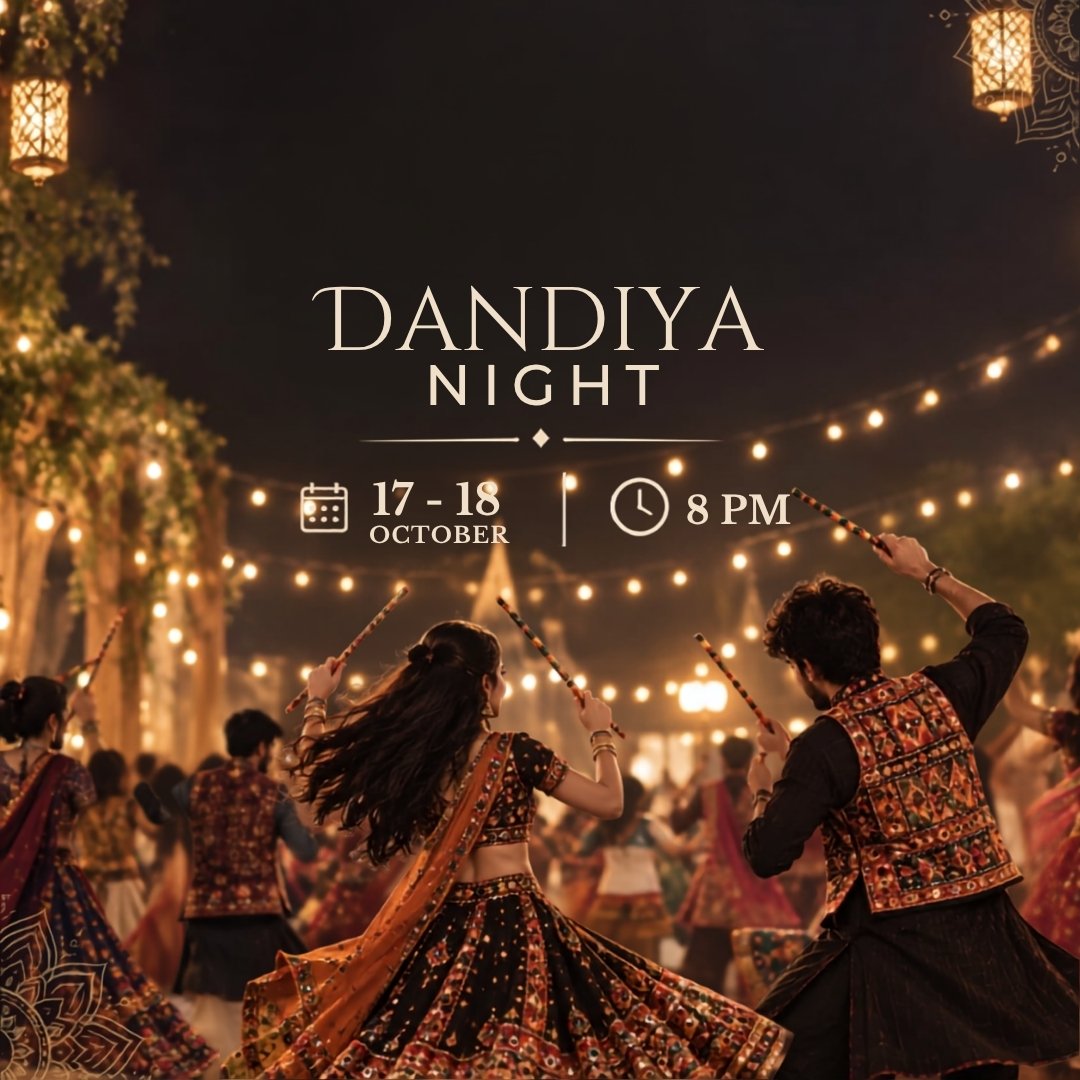
Navratri — literally meaning “nine nights” — is often mistakenly reduced in popular imagination to Garba circles, colorful attire, and Dandiya music. But these nine nights represent one of the most profound, layered, and geographically diverse cultural expressions in Hinduism. It weaves together threads of mythology, spiritual practice, historical tradition, artistic expression, agricultural celebration, social harmony, and pre-modern astronomy into a single, vibrant convergence.
For the participant, Navratri may mean devotion, dance, fasting, or family. But zooming out reveals a festival that is fundamentally about transformation — both inner spiritual transformation and outer seasonal transformation. Its rituals map precisely onto Shaktism’s spiritual concepts, North India’s post-monsoon agricultural clearing, and Gujarat’s historic community organization patterns that have preserved these traditions for centuries.
This guide explores Navratri not as a singular event but as a cultural ecosystem — the “how” of its celebrations, the “why” behind its variations, and the “what next” as it evolves in modern India and the global diaspora.
1. The Three Universals: Core Elements Across All Navratri Celebrations
Despite India’s vast regional diversity, three core practices connect nearly every Navratri observance across the subcontinent.
Austerity (Tapasya) Through Fasting
Navratri’s spiritual architecture centers on disciplined voluntary abstinence — not as deprivation, but as spiritual cultivation.
The common fasting framework:
- Ingredient-level restrictions: Avoiding garlic, onion, grains (wheat, rice) during fasts, favoring special fasting flours like singhada (water chestnut) and kuttu (buckwheat)
- Meal timing protocol: Single meal taken during daylight, ideally in the evening after ritual observances
- Lifestyle adjustments: Abstaining from non-essential entertainment, focusing on spiritual texts and company
Philosophical foundation: The nine days mirror a controlled spiritual retreat — deliberately reducing bodily distractions to sharpen mental focus on the divine feminine principle (Shakti).
Goddess Aspect Meditation (Navadurga)
Each of Navratri’s nine nights is consecrated to a distinct form of Goddess Durga, creating a spiritual progression:
| Day | Goddess Form | Sanskrit Name Meaning | Symbolism & Focus |
|---|---|---|---|
| Day 1 | Shailaputri | Daughter of the Mountains | Foundation, stability, invocation |
| Day 2 | Brahmacharini | One Engaged in Austerities | Spiritual discipline, perseverance |
| Day 3 | Chandraghanta | Moon-Bell | Serenity, beauty, family harmony |
| Day 4 | Kushmanda | Cosmic Egg Creator | Universal energy, health, vitality |
| Day 5 | Skandamata | Mother of Skanda (Murugan) | Motherhood, protection, strength |
| Day 6 | Katyayani | Daughter of Sage Katyayana | Courage, victory over obstacles |
| Day 7 | Kalaratri | Black Night | Destruction of ignorance, fearlessness |
| Day 8 | Mahagauri | Great Fair One | Purity, forgiveness, spiritual cleansing |
| Day 9 | Siddhidatri | Granter of Perfection | Spiritual accomplishments, fulfilment |
This structured progression guides practitioners through stages of spiritual development — from establishing boundaries to confronting fears to attaining realization.
Community Confluence (Samanvaya)
Navratri inherently disrupts normal social routines and hierarchies:
- Temporal reordering: Evening becomes primary social time, displacing standard work/home patterns
- Physical congregation: People who normally occupy separate social spheres — young/old, different professions, different neighborhoods — share physical space
- Performative equality: In the Garba circle, skill with steps matters more than social status outside
- Intergenerational transmission: Grandparents, parents, and children participate simultaneously, passing cultural knowledge non-verbally through shared experience
This confluence is intentional. The festival’s structure creates temporary but powerful social cohesion beyond what daily life typically permits.
2. Regional Celebrations: Four Distinct Navratri Experiences
Understanding Navratri’s diversity requires examining how different regions operationalize these three universals within their unique cultural contexts.
Gujarat & West India: The Garba Ecosystem
Gujarat’s Navratri represents the most globally visible version: groups dancing in concentric circles around a central lamp (Garbi) representing the divine feminine.
Social architecture underpinning Gujarat’s tradition:
- Community venue organization: Most Gujarati neighborhoods have a designated community space (often a society ground or club) dedicated specifically for Navratri gatherings
- Professional coordination: Volunteer committees form months in advance to handle logistics, music booking, prize organization, and crowd management
- Cross-generational choreography: Professional choreographers create steps accessible to 8-year-olds and 80-year-olds simultaneously, ensuring universal participation
- Nine-night stamina ritual: Completing nine nights of dancing becomes its own spiritual discipline — a test of physical endurance mirroring the spiritual endurance of the fast
Modern evolution: Gujarat’s model has become India’s cultural export — Mumbai’s Lalbaugcha Raja-style pandals now feature Garba nights, and global Gujarati diaspora communities reproduce the model in New Jersey, London, and Nairobi with remarkable fidelity.
Eastern India (West Bengal, Odisha, Assam): Durga Puja’s Grand Narrative
In Bengal, Navratri culminates on the tenth day as Durga Puja — a festival so significant it functions as the region’s primary annual cultural event.
Distinctive elements:
- Artistic pandal culture: Neighborhoods compete to create elaborately themed temporary structures housing intricately crafted Durga idols
- Dhaki drummers: Traditional dhak drum rhythms create a distinct sonic ecosystem different from Gujarati Dandiya pop
- Sindoor khela: On the final day, married women smear each other with vermilion, celebrating feminine solidarity
- Eco-conscious idol immersion: Modern innovations like soluble clay idols for Visarjan demonstrate tradition adapting to contemporary environmental awareness
Cultural significance: For Bengalis, Durga Puja is less about individual austerity and more about collective cultural expression — it’s where Bengali identity recharges annually.
Northern India (Delhi, Punjab, UP): The Spiritual & Martial Traditions
North Indian Navratri often focuses more on the spiritual than the performative.
Primary practices:
- Akhand Jyoti: Maintaining a continuously burning oil lamp throughout the nine days
- Kanya Pujan: On the eighth or ninth day, young girls (representing the Goddess’s nine forms) are honored with food and gifts
- Ramlila performances: In many North Indian towns, dramatic reenactments of the Ramayana occur parallel to Navratri
Variation: Some communities conclude Navratri with Dussehra, burning effigies of Ravana to symbolize victory of good over evil — connecting the festival explicitly to the Ramayana narrative.
Southern India (Karnataka, Tamil Nadu, Andhra): The Golu Tradition
South India’s Navratri centers around “Golu” or “Bommai Kolu” — elaborate, tiered displays of dolls and figurines.
Symbolism: The tiered arrangement (typically odd-numbered steps: 3, 5, 7, or 9) represents cosmological hierarchy while the dolls depict scenes from Hindu epics, daily life, and sometimes current events.
Social function: Women visit each other’s homes to view Golus, exchange gifts (typically coconuts, clothes, sweets), and sing devotional songs — creating a nine-day circuit of social bonding.
Contemporary adaptation: Modern Golus increasingly include figurines representing doctors, scientists, and even current political leaders — making the tradition both timeless and timely.
3. The Cultural Ecosystem: What Navratri Sustains Beyond Religion
Navratri functions as a cultural infrastructure that supports multiple dimensions of community life simultaneously.
Economic Impact & Artisan Support
The festival creates annual demand cycles for multiple artisan communities:
- Textile workers: Chaniya choli and kediyu makers in Gujarat and Rajasthan experience their peak annual season
- Jewelry craftsmen: Traditional silver and lac jewelry sales spike
- Musicians: Dhol players, singers, and audio technicians get sustained employment
- Idol makers: Kolkata’s Kumortuli and other idol-making neighborhoods work year-round for Navratri/Durga Puja
- Flower growers: Marigold farmers experience their highest demand period
Social Integration Mechanisms
Navratri creates structured social integration:
- Cross-generational: Grandparents, parents, and children share activity space in ways daily life rarely allows
- Cross-community: In many urban societies, participation extends beyond Gujarati or Bengali communities to include neighbors from different backgrounds
- Cross-class: Community events often have minimal entry costs, creating rare spaces where economic diversity coexists socially
Cultural Transmission Pathways
- Non-verbal teaching: Children learn dance steps, mudras, and ritual actions by observing rather than formal instruction
- Oral tradition reinforcement: Stories of Durga and her battles are retold through music, drama, and conversation
- Aesthetic education: Exposure to traditional clothing, decoration, and food creates cultural literacy
4. Evolution & Modern Adaptations: Navratri in Contemporary India
Digital Navratri
- Virtual attendance: Livestreamed Garba events during the pandemic created participation models that continue
- Online learning: YouTube tutorials for Garba steps democratize access beyond traditional community settings
- Social media sharing: Instagram and Facebook become platforms for Navratri fashion, food, and decoration inspiration
Commercialization & Its Limits
While commercialization has grown, Navratri retains structural resistance to complete commodification:
- Core rituals remain non-commercial: Fasting, puja, and home rituals cannot be easily commercialized
- Community control persists: Most large Garba events remain organized by community trusts rather than purely commercial entities
- Sacred-profane balance: Even commercial events maintain ritual elements like the central Garbi lamp
Environmental Consciousness
- Clay idol innovations: Soluble clay for Durga Puja immersions reduces river pollution
- Flower composting: Temple and pandal flower waste increasingly gets composted rather than dumped
- Energy efficiency: LED lighting replaces traditional bulbs in decorations
5. Community Building: Navratri as Social Architecture
The most profound aspect of Navratri may be its social engineering. The festival creates specific community-building mechanisms:
The Participation Gradient
Navratri offers multiple entry points for participation:
- Core participation: Full fasting and nine-night attendance
- Partial participation: Attending weekend nights while maintaining regular workweek
- Peripheral participation: Attending one night, wearing traditional clothes, enjoying festive foods
- Supportive participation: Helping with organization, driving family members, creating decorations
Key insight: This gradient prevents exclusive gatekeeping — someone can participate at their comfortable level while still belonging to the community celebration.
Conflict Resolution Framework
Community organizations planning Navratri events often develop mediation skills that transfer to other community issues:
- Resource allocation: Managing limited space, time slots, and funding requires negotiation
- Intergenerational negotiation: Balancing traditional music with contemporary requests requires compromise
- Neighbor relations: Managing noise, parking, and crowds necessitates diplomacy
Cultural Identity Reinforcement
For diaspora communities especially, Navratri becomes the anchor of cultural identity:
- Language retention: Songs and prayers in Gujarati or Bengali get passed down
- Food tradition preservation: Traditional fasting foods maintain culinary knowledge
- Intercommunity education: Non-Gujarati friends invited to Garba events become informal cultural ambassadors
6. Personal Transformation: The Inner Journey of Nine Nights
Beyond community celebration, Navratri offers a structured path for personal spiritual development.
Progressive Sadhana Structure
The nine days provide a framework for gradual spiritual advancement:
Phase 1: Purification (Days 1–3)
- Physical cleansing through fasting
- Mental calming through mantra repetition
- Environmental simplification through decoration
Phase 2: Activation (Days 4–6)
- Energy cultivation through dance or ritual
- Focus development through meditation on specific Goddess attributes
- Community engagement reinforcing practice
Phase 3: Realization (Days 7–9)
- Courage development through confronting fears (represented by Kalaratri)
- Forgiveness cultivation through Mahagauri
- Integration of spiritual insights into daily awareness
Modern Psychological Parallels
Contemporary psychology recognizes similar structured approaches:
- Behavioral commitment: Starting with small, manageable commitments (single night attendance) builds self-efficacy
- Social reinforcement: Group participation strengthens individual resolve
- Ritual as cognitive anchor: Daily rituals create stability in otherwise chaotic modern lives
7. Starting Your Own Navratri Tradition: A Practical Framework
Whether you’re part of a large community or creating traditions in a new location, this framework helps build meaningful Navratri observance.
Year 1: Establish Foundations
- Create your home altar: Even a small space with a picture of Durga, a lamp, and fresh flowers
- Choose your level of fasting: Whether full fasting, vegetarian only, or simply avoiding processed foods
- Attend one community event: Even if unfamiliar with dance steps or rituals
- Learn one devotional song: Memorize a simple aarti or bhajan
Year 2: Deepen Practice
- Extend fasting commitment: Add one more day of full fasting than previous year
- Learn basic dance steps: Many community centers offer beginner Garba classes before Navratri
- Host a small gathering: Invite friends for one evening of simple celebration
- Read about symbolism: Understand the stories behind the Nine Goddess forms
Year 3: Community Contribution
- Volunteer at an event: Help with decorations, registration, or cleanup
- Share knowledge: Help newcomers learn basic steps or rituals
- Create cross-cultural connections: Invite non-community friends to experience the celebration
- Document traditions: Record family recipes, stories, or rituals
Conclusion: Navratri as Living Culture
Navratri persists not merely as religious ritual but as living culture — a flexible, adaptive framework that simultaneously:
- Preserves ancient spiritual concepts
- Maintains artisan economies
- Engineers social cohesion
- Facilitates cultural transmission
- Provides personal transformation pathways
- Adapts to modern environmental consciousness
- Bridges geographical diaspora communities
Its strength lies in this multiplicity. A festival that can encompass both the intensely personal discipline of a nine-day fast and the exuberant collective expression of a thousand-person Garba circle contains within it the resilience to evolve across centuries.
The folk wisdom often repeated during Navratri “जय माता दी” (Victory to the Divine Mother) takes on deeper meaning when understood not just as devotional exclamation but as acknowledgment of the feminine principle that creates, sustains, and transforms both individual consciousness and collective culture.
As you participate in Navratri whether through fasting, dancing, decorating, or simply observing — you’re engaging with a cultural continuum that maps the human journey from spiritual longing to community belonging, from individual discipline to collective celebration, from ancient wisdom to contemporary adaptation.